

An Immense Challenge for Our Species - with John Nixon - Part 1
The Rincon Horizons podcast is where we talk about what it means to reach the summit on your leadership journey. We want to help you lead better so your organization can climb higher. Todd and Dylan welcome John Nixon, the Global Group VP of Process Industries at Siemens Digital Industries Software, to the podcast.
-
Every generation believes its technology is the one that finally breaks us. John Nixon has heard it before — from Frankenstein's electricity to whale oil to kerosene to electrified streetlights — and he knows our species has always risen to the challenge. In this episode of Rincon Horizons, the Siemens Group VP of Process Industries argues that AI is simply the latest chapter in a very old story: humanity learning to hold immense power responsibly.
But the challenge Nixon describes isn't abstract — it's showing up in real time, in real infrastructure. Data centers are straining power grids, nuclear is roaring back as a serious option, and countries are racing toward fusion on compressed timelines. Complexity, as Nixon puts it, isn't the exception anymore. It's the norm — and it's only accelerating.
Todd and Dylan press John on what it takes to lead through that kind of moment: not fear, not retreat, but a willingness to run toward the fire. It's a conversation about the scale of what's ahead for energy, AI, and industry — and why meeting it starts with the same instincts that have carried humanity through every previous challenge.
-
Global energy transition
AI power demand
The power needed to explore the moon and mars
Why real leaders take risks
Mentoring the next generation
-
The AZ Techcast: https://www.aztechcouncil.org/podcasts/
Nikola Tesla World Wireless System. Wireless transportation of power: https://en.wikipedia.org/wiki/World_Wireless_System
Substack: https://substack.com
The Wall Street Journal: WSJ.com
Playing to Win, How Strategy Really Works: https://a.co/d/07wEEYMe
The collective works of William Shakespeare: https://a.co/d/08b2uXrh
Sherlock Holmes Series Complete Collection by Arthur Conan Doyle: https://a.co/d/00rPDP3Z
Frankenstein by Mary Shelley: https://a.co/d/0eO9yhbU
Footnotes of History Podcast: https://www.youtube.com/playlist?list=PLJsPQw6y4w8faZ1bQ_LVZ_H7nvkhJhbP2
Naval Aviation Ready Room podcast: https://podcasts.apple.com/us/podcast/the-naval-aviation-ready-room-podcast-with/id1827033159
The Industry Forward Podcast: https://blogs.sw.siemens.com/podcasts/category/industry-forward
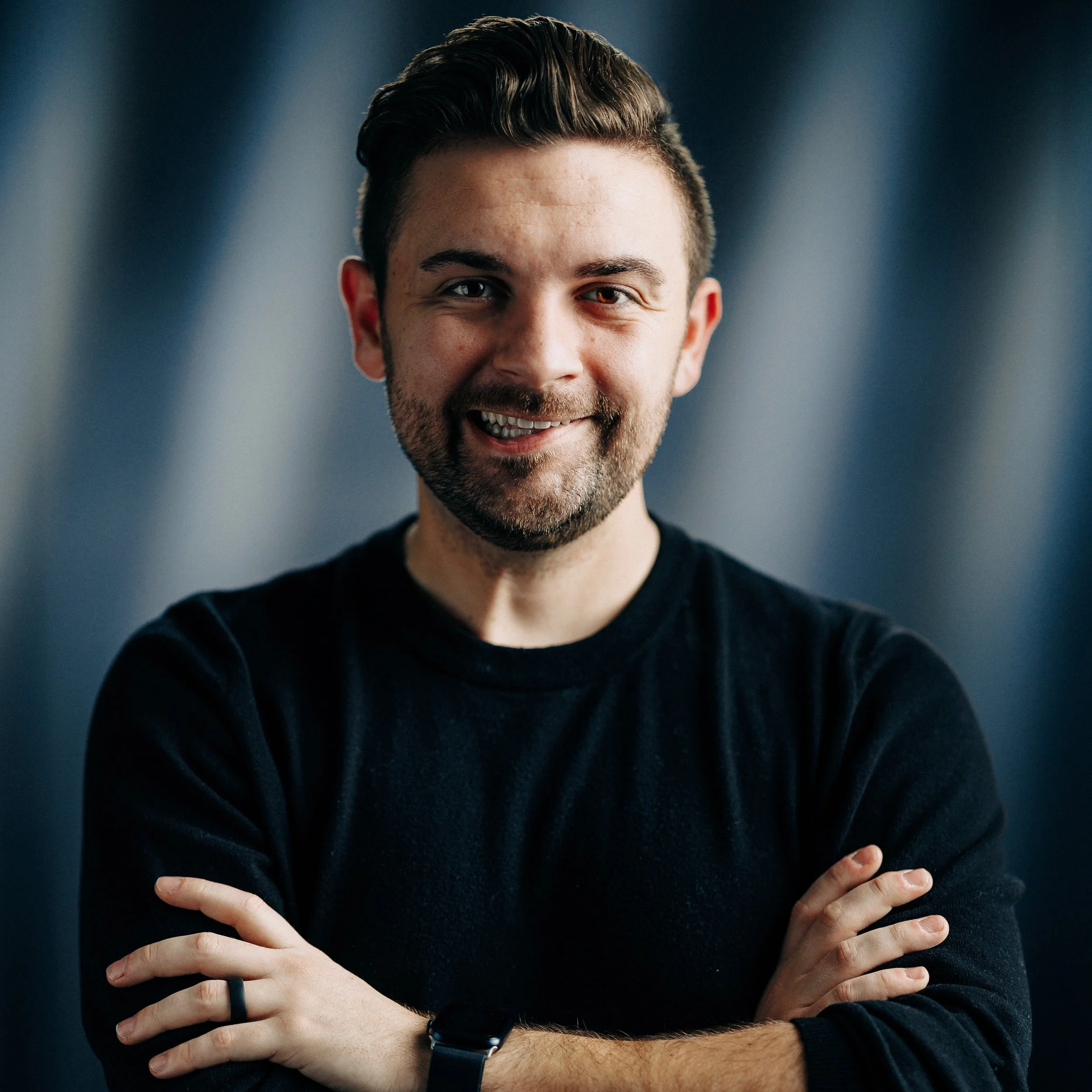
Moderator & Co-Host Dylan Mitchell
Dylan is the Brand Strategist, Creative Director, and Founder of DM.supply. He’s passionate about helping churches, nonprofits, and businesses of all kinds build brands that are clear, meaningful, and built to last.
Find Dylan on LinkedIn at: https://www.linkedin.com/in/dylnmtchll/
DM.supply: https://www.dm.supply
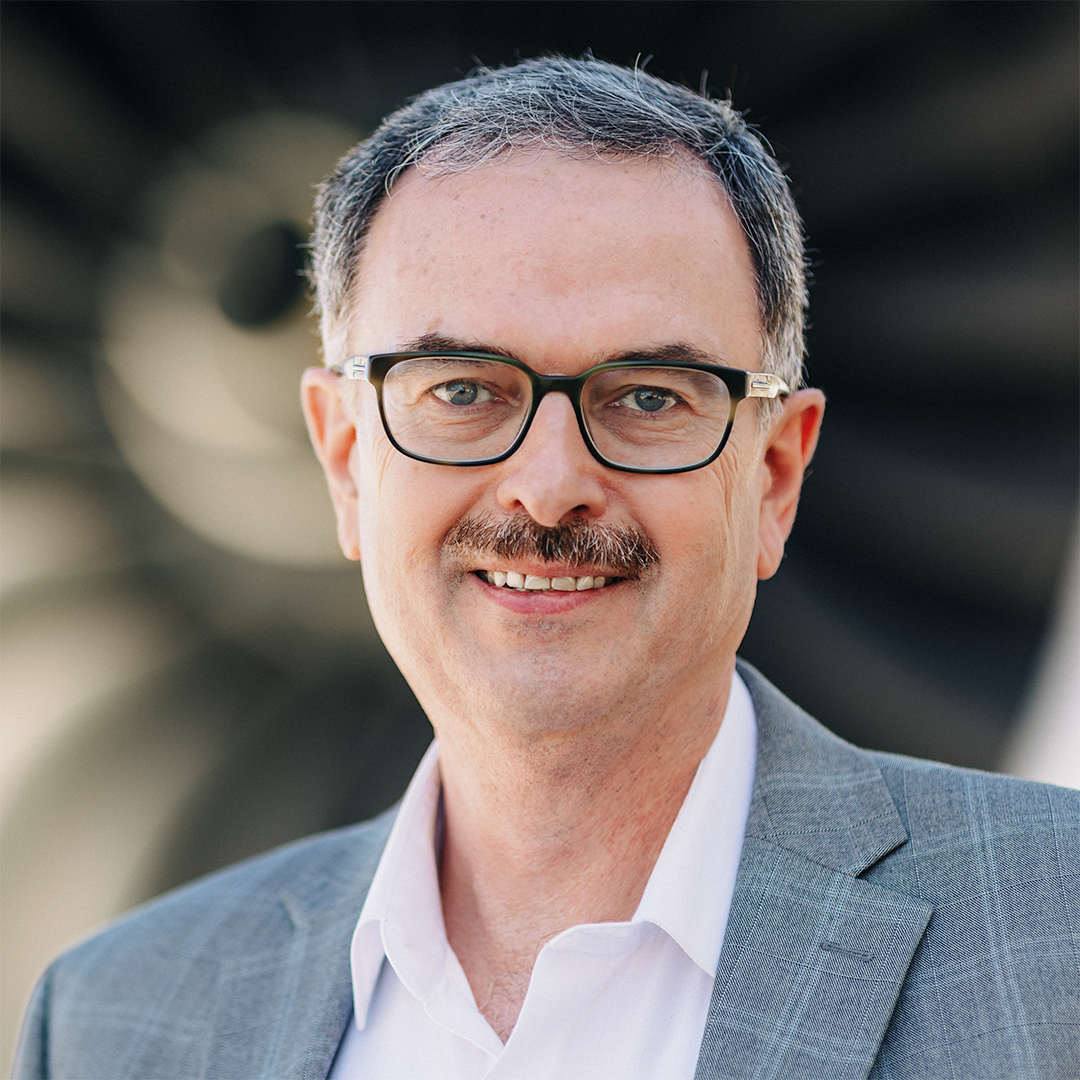
Primary Contributor & Co-Host Todd Tuthill
Todd is the Managing Partner of Rincon Aerospace - A consulting company guiding aerospace and defense companies to exceptional.
Todd is an aerospace executive and systems engineer with more than three decades of experience designing aircraft flight control systems
Find Todd on LinkedIn at: https://www.linkedin.com/in/toddtuthill/
Rincon Aerospace: https://www.Rincon.Aero

Our Guest: John Nixon, the Global Group VP of Process Industries at Siemens Digital Industries Software
John leads a global team that helps process industries leverage digital solutions that enhance efficiency, accelerate innovation and achieve sustainability goals.
John has over three decades of experience in strategy, operations and technology deployment for energy, chemicals, life sciences and CPG. He is well versed in the operational and business pressures of industry, including regulatory demands, decarbonization, talent gaps and the push for innovation.
The Industry Forward Podcast: https://blogs.sw.siemens.com/podcasts/industry-forward/
John on LinkedIn: https://www.linkedin.com/in/johnnixon/
-
An Immense Challenge for Our Species - with John Nixon - Part 1
Dylan Mitchell
Hey everyone, I'm Dylan Mitchell, and this is the Rincon Horizons Podcast. This show is all about leadership, what it takes to grow, adapt, and keep moving forward when the stakes are high and the path isn't always clear. Our goal here is simple. We want to help you lead better so your organization can climb higher. As always, I'm joined by my co-host and our main contributor, Todd Tuthill managing partner of Rincon Aerospace.
Todd, it's great to have you back. And for those who may be listening for the first time, would you give us a quick version of your story? What led you to aerospace, leadership, and ultimately founding Rincon Aerospace?
Todd Tuthill
Sure, Dylan, thank you. And it's good to be back. I'm the managing partner for Rincon Aerospace. We do executive level consulting for aerospace and defense companies. We help good aerospace companies become great, and we help companies that aren't even in the A and D space move into this great industry. But Dylan, I'm stoked. I'm excited and I'm pumped about our guest today. I've known John for
Four years. We used to work together on the same industry team at Siemens. We've traveled the world together. We've joined each other on respective Siemens podcasts. John is a man of many talents. In addition to engineering and leadership, he is the coolest home audio video studio of anyone I know. He's got way more A V skills than anyone with a civil engineering degree should ever have. John and I also share an affinity for a chain of truck stops called.
Buc-ees And we do and and I mention that bec yeah, all three of us because it's a proud day. I'm in Arizona in Tucson. As we record this, we are seven days away from the opening of the very first Buc-ees in Arizona. And and I'm just I can't wait to see it.
Dylan Mitchell
Wait a minute. You you two? Is this all three of us now?
John Nixon
All three of them.
Todd Tuthill
If you're listening to this in Europe, or maybe in Asia, this is Buc-ees B-U-C-E-E-S. You can Google it. It's a truck stop. It will blow your mind. but enough on enough on Buc-ees right now. They're not sponsoring this podcast. Maybe they should be. But but Dylan, this is gonna be a difficult podcast to control. So you're gonna have to work pretty hard to keep John and I under control today.
Dylan Mitchell
Yet yet.
We're off to the races. Honestly, I think if Buc-ees in Arizona had been open whenever I still lived in Arizona, I think my wife would have advocated that we get married in Buc-ees. So I'm weirdly grateful that it wasn't open yet. and that said, I'm not sure I'm qualified to to referee this conversation, but I'm gonna give it my best shot. like we say every episode, leadership shows up anywhere people are solving problems, building teams, trying to move an industry forward.
Todd Tuthill
Ha ha ha.
John Nixon
Yeah.
Todd Tuthill
There you go.
Dylan Mitchell
and today's guest sits right in the middle of some of the biggest conversations happening right now: energy, digital transformation, AI, and the future of industry technology. joining us is John Nixon Group, Vice President of Process Industries at Siemens, where he leads a global team helping organizations use digital tech to improve performance, accelerate innovation, and meet increasingly complex business challenges. John, what a read-on. we're glad you're here.
Welcome to Rincon Horizons.
John Nixon
Well, thanks, Dylan. And Todd, as always. it's great to be with you. And Todd, we've logged a lot of miles together over the years. And, you know, those airport lounges, those team meetings, they all start to blur together. but the conversations, they don't, and your company is always most welcome. I'm really looking forward to this episode.
Todd Tuthill
We have. We have.
Dylan Mitchell
Man, if those airport lounges could talk. most people know the version of your story that exists today, John. the the Siemen's role, the leadership responsibilities, the industry influence. but in my experience and in my experience hosting this podcast, certainly, those careers rarely happen in a straight line. so when you look back, what are some of the chapters that really shaped you? The experiences, maybe setbacks, opportunities or
Todd Tuthill
It's good that they can't.
Dylan Mitchell
Honestly, even failures, we can talk about that too if you want to. G just having the biggest impact on where you are now.
John Nixon
Happy to talk about both success and failure. They're both wonderful teachers. it definitely hasn't been a straight line, you graduate from college or trade school and you think you know what you're going to do, and life takes you in a whole different direction. You know, early in my career, I was right off the bat deep in the energy industry. real assets, real operations, real consequences if you get things wrong. and I was working at a company called Enron. And for me,
and a lot of people, that was a hard reset. That company had tens of thousands of employees and went completely bankrupt. And within a day, you had all those people standing out on the street with a box in hand. It was a an interesting start to a life for a young professional. So from there, it was very much sink or swim.
I spent years building and rebuilding startups, projects, anything that created value. And honestly, a lot of it was driven by a pretty simple motivation. I had a family to take care of, And failure wasn't theoretical. I was out in the field building systems, managing projects, solving problems, in environments where you don't get a second chance. pipelines, storage systems, all in extreme conditions. And
You learn very quickly what works and doesn't work. Looking back, that period really shaped everything for me. It gave me this bias towards execution, Towards solutions that actually work in the real world, not just on paper. over time, this evolved into what I do today, Helping companies take that same mindset and apply it at scale through digital transformation. So while Enron
was a low point. Some incredible high points manifested from that. in that sink or swim opportunity I had in life. I became a founder and a board member of I had patents that I wrote, got them funded, then we started this company and I became a founder and board member to reline as friable asbestos concrete pipes in southern Romania, working with United Nations. I was a board member for one of the institutes at Rice University called the Energy Environmental Institute. And we built the National Corrosion Center.
Which now is at the Texas Engineering and Extension Service. I started a microbial-enhanced oil reclamation company with a colleague of mine, M-E-O-R, where we used facultative bacteria from wastewater treatment, but we transitioned that over into oil and gas to dephrinate stripper wells. And then I was also a nationwide director of a program management office. So, early.
failure or let's just say disruption in life from the company I was at led to opportunities for innovation and quite frankly, a d very determined attitude to triumph over what life throws at you.
Todd Tuthill
John, I want to go back to something you said. You said I had a family to take care of. Failure wasn't theoretical. Would you expand on that?
John Nixon
Every day you get up and you make it a full time job to find work. You spend, fifteen, eighteen hours a day, where you get up and the first thing you think of is what how am I gonna put literally put food on the table for my children? And what am I going to do to set an example? And you hear it oftentimes said, failure's not an option, never quit. And that all sounds great.
And then you have to live it. And it's hard. And I'll tell you, it shaped my view on life even now. I'm here at one of the most incredible companies ever. I am blessed every day to work at Siemens. I'm in a phenomenal role. And yet, I'll tell you, the way I operate is as if it could all be gone tomorrow. it's an absolute focus and a pouring out of energy.
That will never stop and it will be here every day because I know how furtive life can be.
Dylan Mitchell
With that in mind, do you think that carrying the mental burden of it can all be gone tomorrow, does that feel taxing in ways or does it feel freeing for you to be in that headspace that it could all be gone
John Nixon
Since it this is my therapy session today. I will say you ask, is it taxing? It can become wearisome at times. But the flip side is when I'm with like for example, on this podcast, or I'm speaking at a trade show this week and I'll be speaking at another show next week, and then I'll be at our realized live event the week after that.
My attitude is I want to load up the gun, And fire round after round after round, in life and keep generating value, keep raising up the next generation. Do whatever it takes to grow another day. So it it is taxing, it is. But the flip side is it can be rewarding when you work through all of these challenges that life keeps bringing at you.
We decide how we respond to life, That's what every individual does. Do I let it beat me down or do I grab it by the throat and just roll? And so it's attitude makes a big difference. for me, I'm just not going to let it beat me, I'm going to get after it. So wearisome yet, triumphant.
Todd Tuthill
You talked about real assets, real operations, real consequences in the real world and the industry energy. You were doing real physical things, getting your hands dirty, you know, really getting your hands dirty in the in the oil industry. W how did you become interested in digital transformation? Why did you make the switch?
John Nixon
It's a great question. I don't really think there was a single moment where I said, I'm going digital, I'm gonna be in the IT industry. So dig digital just kept showing up as the answer to very real problems. when you're running large programs or managing assets in extremely harsh environments, you're dealing with extreme complexity, Data and coordination, risk, labor, personnel.
Contractors, subcontractors, owner operators, the list goes on and on. And you realize pretty quickly that manual processes are not, they they don't scale. So we started building systems, sometimes from scratch, to track assets, automate workflows, improve visibility. I was deploying these systems and then I had the fortune of then having to turn around and use them myself in the field. And that's when it clicks, no pun intended.
Digital isn't just an abstract idea. It's how you it's really how you get that decision supported, how you make better decisions, faster with with more confidence. And and why it matters is is simple. These industries, the ones I work in, energy, chemicals, life sciences, consumer packaged goods, they're they're under more pressure than ever. More demand, tighter margins, higher safety expectations.
You've got sustainability always a part of all of that. And you can't solve that with incremental improvements. You you fundamentally need a different way of operating, and that's where digital comes in. Looking back at at my experiences, when I was running nationwide program management office, being able to get everybody on the same sheet of music from executives down to the field on where we stood in project progress.
Robotic automation. When I was in Romania and we had robots on sleds that we pulled through, wastewater lines, the amount of asset information we were able to gather in a very rapid or a very compressed time frame was amazing. this led me into the world of asset integrity, which is data intensive. So whether I was inspecting pipelines or working on above ground storage tanks or walking the line with inspectors on high pressure systems in these, adverse environments, such as brine environments near the coast or extreme cold weather. This is an example of the everyday, ever growing complexity, and digital is such an important part of that.
Dylan Mitchell
John, I I think a lot of us in that regard have become maybe accidental energy experts over the last few years. mostly because we keep paying utility bills and filling up our gas tanks. I I filled up the Costco yesterday and I wanted to cry and they weren't tears of joy. but when you zoom out and take a different angle, we're in a pretty fascinating moment when you look at the future of energy.
I wonder what genuinely excites you and what are some changes that most people don't see that are probably coming.
John Nixon
The thing about the energy business is it's always one that's in flux and it's always with extremes. It goes without saying that we are living in a really fascinating moment of transition.
In the energy space. Of course, if you look back at our species where we moved from biomass, and then we had coal, and you keep looking at all the varied forms of of energy, whale oil, kerosene. it's amazing the transitions we've gone through to become an electrified species. what really excites me is that we're moving
From energy transition as a concept, it's really an execution challenge now, I'm always focused on execution. And I always think factory, floor, and field. And I think that's the big shift now, is we're no longer like 30 years ago talking about w the promise of wind, The promise of solar, the promise of potentially small module reactors or fusion energy. We are living that right now.
It you always hear you want to live in interesting times, that's where we are. Yeah.
Todd Tuthill
John, if I could stop you right there, because I hear those things, but I'm gonna push back a little bit. Okay, 'cause you talk about those things. those alternate energy, what percentage are let's say either in Europe or in the US, are we using of those alternate energy sources right now versus more traditional kinds of energies, fossil fuel sources?
John Nixon
It's a great question. depends on which country you're talking about or which region. I will say that it's incredible in Europe to see how much of the renewable space makes up their power generation. When you're here in the US, you're talking about fossil fuel systems that have been around for decades and for a century.
It's not going to be something that you're going to unseat anytime soon. I think what we're going to see is more integrated systems like renewables and traditional energy, storage and hydrogen, all working together. but that forms a lot of complexity. here's an interesting development that's, come up lately. you're gonna see a lot more of nuclear, in this space. With all of the data centers that are now being built.
There's discussion about, power generation behind the meter. I think it was February of this year in 2026. don't quote me, but I think it was February or March. There was a headline about all the hyperscalers and others that were developing significant footprints for data centers were at the White House they signed an an agreement a memorandum of understanding to some degree of bring your own power.
That they were well aware of the demands that data centers now are going to make on entire regions. when you see power bills rising 50 to 70 percent for consumers, and those happen to be the very states where you see all these data centers being installed. I mean, come on, one plus one equals two. So everybody knows there's this tremendous demand for power with this ecosystem that we take for granted, our smartphones with AI on it every day.
I'll tell you if you're in Europe, you see strong renewable footprint. if you're in the US, not so much, if you're down in South America where I just came back from, strong focus on biofuels. and then we just saw a headline here recently where in twenty twenty seven China will have ignition for their first fusion reactor. That's what they're scheduled for.
We're in a race towards fusion as well. it's an interesting yeah. Go ahead.
Dylan Mitchell
I was gonna say, you know, I've I heard you mention
fusion a couple of times. I we gotta talk about the the star in the jar concept. Do you mind going in on that a little bit?
Todd Tuthill
John, and I'll say speak to us like we're a four year old, okay? Because I think some of us may maybe know what fusion energy is, but it's kind of confusing to lots of people. So kind of talk about that a little bit, explain it maybe in non technical terms first and then get into what's really the state of the art in fusion energy right now.
John Nixon
With nuclear energy you have fission, You're splitting atoms, you're releasing energy. you have embers of the Big Bang, Called Uranium 238 and 235, and they hold a lot of energy, have tremendous energy density, in very small, volume. It's tremendous to see how nuclear, in the fifties, the sixties and seventies.
Really began to rise as a source of energy. But of course, we had Three Mile Island more recently. People know about Fukushima. and Chernobyl, of course. In our species, there's this sense of dread when it comes to nuclear because of these big events, and that with so much power, there is such great danger that we've seen. Now, those are the headlines.
Nuclear operates today, we have reactors all over the world operating safely, have operated safely for decades. but there's still this recalcitrance, this hesitancy around it. With nuclear energy, which by the way is different than fusion, we'll talk about that in a minute, but with nuclear energy, what we've seen rise is what's called small modular reactors.
The beauty about small module reactors is they're a complete rethink and a complete redesign of how we manage nuclear fuel. They are I don't know that the word is intrinsically safe, but you can now operate a small module reactor, and if we were to have a zombie apocalypse and no human were to show up at the reactor, it doesn't go super critical.
Because of the way in which they manage the fuel now. It's very exciting to see this. I I visited recently a small fast reactor in Lockhart, Texas, where they're using that reactor not only for power g well it's not so much power generation it's really more for development of medical isotopes for cancer treatments.
it's an interesting offshoot of our use as a species of nuclear energy. So that's nuclear. That's splitting atoms. With fusion, we're now driving atoms together to release energy. You don't have the same kind of hazard of waste that you create. There's some neutron creation from that.
But it's very much an elegant means to mimic the sun in our solar system, which is a fusion, a gigantic fusion reaction. While fission is reusing the embers at the Big Bang, fusion energy is mimicking the very power plant at the heart of our solar system, the sun. And we've got Commonwealth Fusion Systems, one of our premier customers.
That's in fact exactly what they're doing. They coined the phrase a star in a jar. our CEO Roland has been out there. I've been out there, we've had executives out. It's so exciting to see the promise of fusion when that is ignited and it becomes a viable, repeatable, commercial, scalable source of power.
We truly we become an interstellar species. Power will no longer be a limit. It's exciting. we hear talk about the moon and Mars now and everything. And I'm here to tell you energy will meet that challenge and it's exciting.
Todd Tuthill
Let's put together a couple of things we talked about already. We talked about AI, we talked about fusion energy, we we talked about the need for that. I live here in Tucson, as I said before, and Tucson, like a lot of areas in the country right now, are having a real battle over AI data centers. I don't want an AI data center in my backyard. It's gonna take all my power, it's gonna take all my water. so can you talk about that just a little bit? Why do AI data centers take so much energy, so much water?
And, talk about the promise about power behind the meter. is fusion energy gonna fix that? Is it gonna make that better? When is that gonna happen?
John Nixon
These are all great questions. I'll acknowledge I'm gonna speak from my viewpoint, my bias, and what I experienced in the field. This is exciting. This is where the conversation is getting real, the numbers aren't small. A modern hyperscale data center, especially one supporting AI, it can typically operate in the range of twenty to a hundred megawatts of continuous power.
The large campuses are going well beyond that. To put that in perspective, a hundred megawatt facility is roughly equivalent to powering 80 to 100,000 homes and it runs 24-7. And here's the part most people don't realize is roughly half of that power is not compute. It's cooling and infrastructure. All that electricity turns into heat. So a single large data center, it's rejecting, 10, 20, 30, for the really large campuses, a hundred megawatts of waste heat.
That heat has to go somewhere, and that's where water comes in. For cooling, let's look at the numbers. a typical hyperscale facility is using 500,000 gallons per day, Large and less efficient facilities are probably somewhere between one and point one to five million gallons per day. You annualize that, that's up to 1.8 billion gallons per year for a single large campus.
That's why you'll hear the phrase one data center can consume the same water as a town of 10 to 50,000 people. When you when we're talking about that, we're measuring now the effectiveness in these data centers, these campuses, what what they, call water usage effectiveness. when you look at that, there have been huge strides made.
In reducing the amount of water. It's only going to get better, Everybody knows it's a challenge. we need better materials, we need better cooling, we need far less water usage. it's interesting though. I'll say this AI makes it a acutely more challenging. So your traditional racks before in data centers, 7 to 10 kilowatts, But when you add AI to it, now you're talking 30 to 100 plus kilowatts per rack
You don't have to be a water scientist. You don't have to be a civil engineer. You don't have to, you don't have to be somebody to realize this is a real challenge of supply and demand, we're seeing compute concentrate into smaller footprints, But that's also, while that's a challenge, we're seeing tremendous developments in better chips, better materials, liquid cooling, closed loop systems. So
Yes, you have water in the system and it uses that much, but it's a closed loop. So I'm not having to draw a lot of makeup, water for what I lose. you hear about data centers on the seabed floor, in the ocean, and so forth. There is a lot, and then we're hearing about data centers going into space. There are a lot of challenges that are being resolved now with very, very unique solutions.
Again, coming back to my focus on execution. I think about, if I've got a small module reactor, a data center campus, I've got grid interconnects, for secondary and tertiary power supply. I've got on-site battery because you just can't turn on, a nuclear reactor. And if you take it down for maintenance, you still got to keep the power coming. So think about all that complexity.
Think about how you've got to design, simulate, receive equipment, inspect it, assemble it, complete construction, go through commissioning, start it up, operate it, do, scheduled shutdowns, handle outages, that are unscheduled. And all of that has to stay on 24-7. That is an immense challenge for our species. And it's a demand that we take for granted now that we all have
This much computational power in the palm of our hands every day, let alone the laptops that we work on and every and all of our A V equipment, everything else that that makes demand. This life that we take for granted has a backdrop to it of incredible complexity.
Dylan Mitchell
I mean, more complexity than I think my four-year-old brain understood at the beginning of the conversation, certainly. I yeah, I mean, we might be at like six-year-old or something like that. John, we talked a little bit about you used the term interstellar species, and that kind of made me think. the Artemis II mission has a lot of people thinking about the moon again. Certainly me. I live streamed it all day.
Todd Tuthill
So so you went a little higher than four year old, is what you're saying, Dylan?
Dylan Mitchell
not just getting there, but actually staying there. when you think about building a sustained presence on the moon, what does the energy s infrastructure look like to do something like that? Or what are the challenges people probably underestimate or just like my four year old brain don't understand at all when they start to imagine something like that actually becoming a reality?
John Nixon
Let's talk about the moon, you look at the infrastructure we're going to need on the moon, It's gonna and that infrastructure is gonna have to handle extreme temperature swings. There's no atmosphere, there's limited resupply, there's long communication delays, And again, you don't get to fix it after the fact, So what energy systems will look like? Well, I mean, you'll see solar, You hear Elon Musk talking about a hundred square, what is it, a hundred square acres?
Of solar would power all of the US. Like he's really big on solar. You look at what he's invested in. He's invested in solar and battery, boring, all the technologies that you'll need to employ on another planet. So absolutely, solar is going to be, the primary energy source in our minds today. But, advanced energy storage systems will have to be a part of that. And
It again, if we have small module reactors and fusion energy out there on the surface, it's a game changer at that point. But what you also have to remember, whatever the source of power generation is, you have to have highly resilient distributed electrical systems, That you have to mimic what again, we drive down, Interstate 10 here in Houston, and we see these long rights of way that go on for as far as the eye can see.
Of all this power, transmission and distribution. And again, we take it for granted. It's just kind of part of what we have every day. We've spent a century building it. You have to recreate something that mimics that ability in a much harsher environment. if we come back to Mars, remember, it's what enables the moon and Mars is phenomenal engineering.
It's that ability to go from those the smallest molecules, in the lab from design all the way, And creating this truly physics-informed digital twin. Here's the exciting part, So we talk about energy, we talk about AI, I need energy to power AI. I need AI to be able to get a better, energy infrastructure. The the beauty is we now finally, as a species have the capabilities because of all these data centers and because of our innovation, I can sit here and create a complete physics informed, high fidelity, visually navigable model of that infrastructure that I'm going to be putting on the moon, of that infrastructure that I want to put on Mars long before I get there. And I can rely upon it.
You're seeing a lot of aerospace and defense personnel coming into the energy industry. And it's so exciting. One case, and I always call this gentleman out because he's probably the smartest person or one of the smartest people I've ever met in my life. His name is Bill Hahn. He worked at NASA. He was a NASA engineer. Then he worked in the energy space. He now works for us at Siemens. He was there working on the International Space Station with Siemens Software. And again, always these challenges of extreme conditions and working with.
Humans and machines in close proximity in these dangerous conditions. And it's exciting to hear the stories he shares of how we overcame challenges. I'm excited to see this confluence of the space industry and then into the energy space, this kind of intersection that we've now seen evolve. It changes everything for us as we go forward. So could not be more excited about the moon because of the lessons we've learned from Mars that are going to make it a reality.
Dylan Mitchell
That's all the time we have for this episode, but this conversation is not over, far from it. We're gonna pause here though and we'll pick it up in the next episode.
John, thanks so much for spending time with us today.
Before I get into the close, you actually have your own podcast, isn't that the Industry Forward podcast?
John Nixon
Yes, it's the industry forward podcast. And you know who will be happy that I mentioned this on your podcast will be Kate Eby, who works for with us here at So she's wonderful to work with. She's been leading that effort and we it is. It's a great podcast. I'd welcome anybody. Thank you for mentioning it. It's absolutely wonderful to do everything I can to share as much information as possible.
Todd Tuthill
Shout out to Kate. How you doing, Kate?
Dylan Mitchell
Wonderful. We will put the link to that in the show notes as well as a link to your LinkedIn, John, as long as you're fine with people connecting with you over there and you want to make some new friends.
John Nixon
Absolutely.
Dylan Mitchell
Todd, thank you so much and thanks to everyone for listening. Every episode of Rincon Horizons is about unpacking the decisions and disciplines that shape us all as leaders at work, at home, and everywhere in between. Our goal is simple, to help you lead better so your organization can climb higher. If today's conversation challenged you or encouraged you, share it with someone who's thinking about making the leap. You can also learn more about Rincon Aerospace or connect with Todd through the links in the show notes or at Rincon.Aero. That's R-I-N-C-O-N.Aero I'm Dylan Mitchell. can learn more about my work at dm.supply. Thanks for listening. We'll see you next time on Rincon Horizons.