

Surviving Entrepreneurship with Tom Yeaton - Part 2
The Rincon Horizons podcast is where we talk about what it means to reach the summit on your leadership journey. We want to help you lead better so your organization can climb higher. Dylan and Todd welcome Tom Yeaton the President of Yeaton Financial Group to the podcast.
-
Entrepreneurship isn't glamorous — and this episode doesn't pretend it is. Join us for a candid three-way conversation about starting businesses when you have a mortgage, a family, and everything to lose. Tom shares his journey from frustrated corporate employee to business owner, the financial mistakes he made along the way, and the faith that carried him through. Todd opens up about his own leap from Siemens to Rincon Aerospace, and Dylan reflects on building DM Supply from a passion for clear communication. Together, the three share hard-won advice on saving money, finding the right clients, involving family in business, and knowing when to finally take the plunge into entrepreneurship. From financial missteps to faith, from client selection to spousal support, this episode covers the real terrain of building something from nothing — and why the timing is never perfect, but you make it right anyway.
-
Three entrepreneurs, three origin stories
Building capital before launching a business
Identifying the right clients and knowing when to say no
When and how to bring family members into a business
Handling the highs and lows of entrepreneurship
-
Yeaton Financial Group: https://www.yeatonfg.com
Rincon Aerospace: https://www.Rincon.Aero
DM.supply: https://www.dm.supply
The New Retirementality by Mitch Anthony: https://a.co/d/064KYVNX
1440 Daily Digest: https://join1440.com
The Sevens Report: https://sevensreport.com
Our Daily Bread Devotionals: https://www.odbm.org/en/devotionals
How to Win Friends and Influence People by Dale Carnegie: https://a.co/d/0gxpLsdu
The 7 Habits of Highly Effective People by Stephen R. Covey: https://a.co/d/070MvLhV
Aviation Week Intelligence Network: https://aviationweek.com
Logos that Last by Allan Peters: https://a.co/d/08p9Z0RR

Moderator & Co-Host Dylan Mitchell
Dylan is the Brand Strategist, Creative Director, and Founder of DM.supply. He’s passionate about helping churches, nonprofits, and businesses of all kinds build brands that are clear, meaningful, and built to last.
Find Dylan on LinkedIn at: https://www.linkedin.com/in/dylnmtchll/
DM.supply: https://www.dm.supply

Primary Contributor & Co-Host Todd Tuthill
Todd is the Managing Partner of Rincon Aerospace - A consulting company guiding aerospace and defense companies to exceptional.
Todd is an aerospace executive and systems engineer with more than three decades of experience designing aircraft flight control systems
Find Todd on LinkedIn at: https://www.linkedin.com/in/toddtuthill/
Rincon Aerospace: https://www.Rincon.Aero
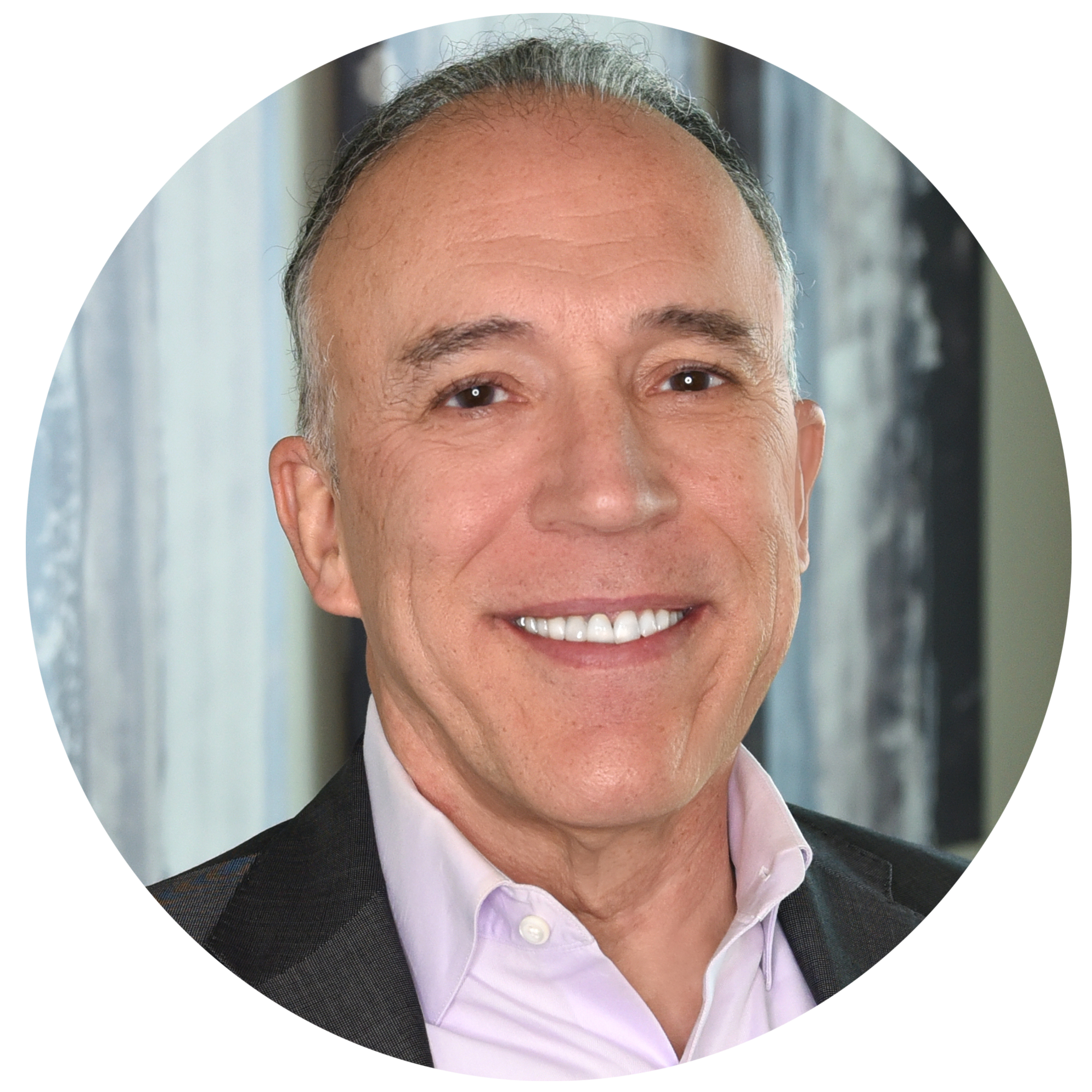
Our Guest: R. Tom Yeaton, CLU, ChFC - Yeaton Financial Group, LLC
Tom is the President and LPL Financial Advisor at Yeaton Financial Group.
Tom began his career in financial services in fall of 1998, and joined NAIFA the following year. Prior to this he was a marketing executive with a national chain of photo retail stores. He believes his role as the director of merchandising & sales for a Fortune 500 company specializing in documenting people’s most memorable life events has provided the ideal foundation for his work as a wealth & legacy advisor.
Tom’s genesis in the financial services industry was inspired by a brief, but unpleasant experience he had with a conventional financial planner who seemed more interested in selling financial products than providing solutions. He was compelled by his desire to do a better job than that. Driven to make a difference in peoples’ lives Tom helps families navigate the complex world of financial decisions by providing clarity and confidence utilizing a process that matches people’s concerns and wishes with optimal strategies and solutions. His governing belief is that you expect trustworthiness and excellence from your financial advisor, as well as understanding how and why your plan is good for you and your family, so you’ll feel good about working with him and his team.
Great empathy and follow-through on his commitments are symbols appreciated by his clients. He is effectively supported by a team including his wife, Tammy, who serves as Director of Operations, and his son, Ryan, a former Marine who serves as a paraplanner and financial advisor. Tom has built strategic partnerships with many other financial institutions and investment & insurance product specialists including LPL Financial, his broker-dealer and Cornerstone Wealth Management located in St. Louis/Des Peres, MO. This teamwork culture and professionalism help him build long-term relationships with his growing client base and provide excellent client service. His practice is focused primarily on building & protecting retirement income for small business owners, and air traffic controllers.
Tom’s passion is as a financial advisor serving individuals and their families. He has also served the local financial & insurance community in leadership roles in training and management. He has worked with several nationally acclaimed financial institutions and has earned many achievement awards over the years. He’s a 1982 graduate of Indiana University’s Kelley School of Business. He resides in Wildwood, MO with his wife, Tammy, of 41 years. They have raised 3 boys, 6 awesome grandchildren, and recently a great-grandson. Tom serves as elder at Wildwood Christian Church, in Wildwood, MO and enjoys traveling to warm climates, fishing, cycling and staying in shape to keep up with their grandkids and great-grandson.
Find Tom on LinkedIn at: https://www.linkedin.com/in/tom-yeaton-clu-chfc-69b78b24/
Yeaton Financial Services: https://www.yeatonfg.com
Securities and advisory services offered through LPL Financial, a registered investment advisor. Member FINRA/SIPC.
-
Surviving Entrepreneurship with Tom Yeaton - Part 2
Dylan Mitchell
Hey everyone, I'm Dylan Mitchell and this is the Rincon Horizons podcast. This show is about leadership, what it really takes to grow, adapt and keep climbing over the course of your leadership journey. Our goal is simple to help you lead better so your organization can climb higher.
Welcome back to the Rincon Horizons podcast. We're picking up right where we left off with Rincon Aerospace managing partner Todd Tuthill and Tom Yeaton, president of Yeaton Financial Group.
Todd Tuthill
A question for all three of we'll start with you and Dylan, Dylan, I'll jump in, but can you talk about some advice you received when you started your business? And maybe what do you wish someone had told you early on that they didn't tell you? What advice would you give to people starting businesses now?
R. Tom Yeaton CLU, ChFC
I received such great advice early on and I wish I would have listened to more of it. It's hard to pin down the best advice. I hate to keep beating up this dead horse, the best advice I got early on was about financial management. But since we've already addressed that, I will say that the other piece of advice was you know more than most people you're talking to. So I fell guilty or fell prey syndrome. I think we know what that is, early on in your business. think, who am I? I'm talking to these folks that are successful in their business and they have way more money than I do and I'm talking to them about insurance and investing and they probably know more than me. Well, the reality is, as I learned, don't know more than me.
Todd Tuthill
And that's great advice, Tom. I think a lot of entrepreneurs feel that way. How do you balance that against desire to not be arrogant? Because you never come across as an arrogant person. So how do you balance the, you know more than the client, but not come across as arrogant pushy salesman?
R. Tom Yeaton CLU, ChFC
My experience, I've been on both sides of that pushy salesman. We are, all of us, like it not, especially if you're a business owner, you're in sales. I that's what there is to it. You're selling a product or a service. But most of us have been on wrong side of a pushy salesperson. And I even had, before I got in the business, Tammy and I had briefly our own financial advisor, and he was pushy and made all kinds of outlandish claims. When I was given this opportunity to change careers and was considering this career, I thought, you know what? I think I could do better than that. And I just thought about the way he made us feel. I felt intimidated and like an idiot.
And to protect my ego, I decided not to do business with him. He'd gotten his Jaguar and drove away and never saw him again. I vowed not to be that person, to always remember where I came from and treat people with respect, because the folks feel like you're being arrogant or you're belittling them. I know a lot of spouses an advisor or whether it an advisor or somebody selling you aluminum siding, they'll only talk to one of the spouses, right? Not the other. Typically it's the guy. When you do that, you're dead. They're not gonna follow through. So I tend to focus more on the person who's not talking as much and ask questions and find out from them, well, what are your goals? more important, what keeps you up at night?
Because at the of the day, if you're in business, you're in the business of solving people's problems. Zig Ziglar said it, you would be wildly successful by helping people get what they want, and then ultimately you'll get what you want.
Todd Tuthill
Great advice Tom, great advice Dylan. What about you? What advice would you give and what advice would you give people starting companies?
Dylan Mitchell
Before I get into mine, I just want to say, I think that it's phenomenal that we go to these conferences and listen to these Ted talks and things. And so often the thing boils down to just treat people kindly, just treat people with respect, just treat people with integrity. That answers is a plethora of things beyond owning and starting a business. It's just, it is a good core principle to have.
But Todd, to your question I think one of the best pieces of advice I got early came from another designer who spent some time working with me and mentoring me. He told me, don't marry yourself to your work. And at the time, I think, I mean, this is me graduated high school, going into college. think intellectually.
R. Tom Yeaton CLU, ChFC
That's so true.
Dylan Mitchell
I understood it, but I didn't really understand how important that would be until years later in practice. And I think maybe not to like get in my own head too much about it, but creative work specifically is very spend hours building a brand, designing a website, writing copy. And especially when you genuinely think it's strong work, it's really easy to tie your identity to the outcome. And so when a client inevitably pushes back or doesn't connect with something the way that you had hoped, it feels or can feel personal if you're not careful.
Todd Tuthill
How do you separate that? I always wondered that with the creative. I'm not the creative person. That's why I hired you. I'm the black and white engineer. It flies or it in the world of creativity, how do you deal with that? You put your, you've invested in this thing and somebody says, gee, that's really the ugliest logo I've ever seen. Dylan, what happens then? How do you do that?
R. Tom Yeaton CLU, ChFC
Hahaha.
Dylan Mitchell
Well, Todd, if you if you get a client like you, you didn't push back on anything. I don't think you were kind of a dream client and enigma, if you will. ⁓
Todd Tuthill
I didn't like one of the fonts and you gave me some advice and just just for the record the font in the logo is the original logo Dylan designed. The idea I had would have been awful so I took the advice of the expert I'm glad I did.
Dylan Mitchell
⁓ Of course.
R. Tom Yeaton CLU, ChFC
Hey, Dylan, can ask you a question? Sorry to interrupt on that, but you made a couple of good points there. Would you consider Todd, and this is, hey, can be wrong, but would you consider Todd your ideal client or a good client?
Dylan Mitchell
Good client. Yes. An ideal client in one vein. I talked a little bit about working more as of late with mission driven organizations and kind of stretching outside of just churches and nonprofits. I don't want to say that Todd is my ideal church client because Todd is Todd is not my church client Yes, Todd. And then another one of our good friends who works at a church that I'm actually on contract with is he's my liaison to that entire church's creative team.
That's another, in my mind, very ideal client and vendor relation setup.
R. Tom Yeaton CLU, ChFC
Well, and that's good. And follow up to that then, do you find those clients that have pushed back? believe me, no even Walmart, some people walk out without merchandise. It may not happen very often. Do you find a consistency amongst client type that pushes back that you find, this is kind of difficult. I don't know if I like working with this type of client. It might be hard to answer if you're
Dylan Mitchell
I don't know. This is, this is a little bit of a raw answer, ⁓ that I haven't really thought about. So, you know, ask me again in five years and I might feel a different way. But I weirdly enough, working with churches and nonprofits, I've done my fair share of pro bono work. and of the time, hopefully most of the time those pro bono gigs turn into,
R. Tom Yeaton CLU, ChFC
Fair enough.
Dylan Mitchell
A paying gig. That's certainly the hope. I'm not a nonprofit myself, so I do like to make money. But the businesses, the the churches that don't want to pay a lot of money, not that I'm out here trying to bleed you dry, but the ones that it's it's almost as if they they don't have any skin in the game.
And because there's no skin in the game, they don't really value your time, your effort, your creative input. It's very easy for it to seem like nothing to them because for them it was nothing. Whereas for you, for me, you were the one who put skin in the game and your skin is your time, your creative mind. If I'm spending my creative mind on you, then it's creative mind I'm not spending on someone else. In a crude way, kind of a harsh way, the ones who don't want to spend a lot of money are the harder ones to work with.
R. Tom Yeaton CLU, ChFC
But that's such a good point and you're not being harsh, you're being honest. Because that's been my experience and the reason why I ask those questions is one of lessons I learned early on, in fact one of the first books I you may cringe, but it was a book on selling. It was called Values Based Selling by guy named Bill Bachrach. And it was written I think back in the 70s maybe. You know what the first chapter was about?
Learn to know who to say no to. The idea being that, of course, when you're early on, mean, in my business, would talk with anybody who could fog them here and had a checking account. the faster you learn who you're... Yeah, I mean, breathe deep,
Todd Tuthill
You probably carried the mirror, didn't you? There you go.
R. Tom Yeaton CLU, ChFC
But the idea being, though, is that the faster you learn who you seem to gravitate toward, or more importantly, who seemed to gravitate toward you, the better. Dylan, I get the I know Todd's this way, you will give as much energy to somebody who is pro bono than somebody that is paying you. And it stings when they give you a pushback or they say thank you very much and don't even refer you to somebody.
Dylan Mitchell
Absolutely, absolutely.
R. Tom Yeaton CLU, ChFC
There's another book called The Go Giver. We know about the Go Getter, but The Go Giver means it's all idea about reciprocity. You're giving and having the faith ultimately, maybe not that person, but ultimately it will come back to I have seen that my business, but you do the best you can with everybody. You to identify those clients, those customers that seem to value you and seem to respect you and take your advice more so than others and you focus on that.
And I'm gonna tell you, your marketing expenses will go down because then you can target that niche rather than doing what has been called attraction marketing where oftentimes we gotta do that early on whether it supper seminars or radio advertising or podcasts or whatever. And I'll say don't do those things. But when you identify who your target is, now you know how to market directly to them. Be where they are. It's like fishing. Go where the fish are. Right there. There you go. Fish can net work when you want to eat a lot.
Dylan Mitchell
Just casting a very broad Fishing line versus fishing net.
Todd Tuthill
So it's like fishing, go where the fish are. That's maybe a podcast title too, we'll have to see.
Dylan Mitchell
The title for this episode should be Let's Go Fishing.
R. Tom Yeaton CLU, ChFC
Well, you know, ⁓ all this great materials in the Bible, you know.
Todd Tuthill
Let's go fishing. There you go.
Dylan Mitchell
This is to answer the rest of your question, Todd, kind of joked, you said I didn't like that, that font or I didn't like that, whatever, whatever the initial feedback was. I do think it's there's an important distinction between criticism and constructive feedback. ⁓ Constructive feedback in a client relationship is incredibly valuable.
Todd Tuthill
True.
R. Tom Yeaton CLU, ChFC
Absolutely.
Dylan Mitchell
Because it gives you something to work with. If a client can articulate what feels off, what isn't connecting or what they're hoping to communicate differently, collaborative and that's very productive. What becomes very difficult is when feedback stops at, just don't like it or make it pop or make it bigger or there's no clarity behind why and then that creates this kind of endless feedback loop of revisions where no one's really solving a problem.
Over time I realized that part of my job isn't just designing, it's leading communication well. That's why I've become really intentional about my onboarding meetings, project touch points, and all the systems I use with my clients. I've built detailed request forms and discovery processes and just all these very specific questions. And Todd, from the client side of it, maybe you can tell me, maybe it's very annoying too many questions.
I think it alleviates a lot of the back and forth. I know what you're looking for based on how you answer these questions.
Todd Tuthill
I'll say for the the engineer mind in me Dylan really appreciated that I had again no idea I thought we were have a session we're gonna talk about colors of blue and puffy clouds and feelings and emotions to set up the brand identity I had no idea yes maybe he's long and I loved it it really forced me to think about what my business what the value was what my business was about so I thought it was was great for an engineer's mind I don't know about a creative's mind but I really appreciated it.
Dylan Mitchell
That's good to hear.
R. Tom Yeaton CLU, ChFC
You know, it's interesting is listening to you, Dylan, your process is not much different than mine early in any business. One of the smarter things I think I did earlier on was hire a business coach. I've had business coaches almost my entire financial career. good enough professional athletes. The best of athletes still have personal coaches.
One coach said, you don't know, when you're working with a client and they can't identify what they want, then like you said, you spend a lot of time and energy, you're all over the place. I think in any business there's art and there's science. The science is of course the numbers and what kind of client are they, what business are they, what do they want to accomplish. But the art is maybe extracting from them.
Answers to questions they haven't asked themselves yet and when you get to the point where what I'm talking to somebody about their financial future. They're about to retire the first thing I asked him. Well, what are you gonna do when you're when you're no longer having a trade time for income? And you talk about a pregnant pause time It's it's alarming how many but I really thought about that. A lot of these air traffic controllers, so I'm just gonna sleep for six months. Okay
So after six months, you wake up, now what? And that's a great follow-up quote. Now what? Now what? So there's a great book out there written by guy named Mitch Anthony. used to be a financial advisor called The New Retirementality. In essence, that book says studied thousands and thousands of retired executives who just couldn't wait to go fishing or play golf. And what he found, what he learned was, six, eight, 10 months after they retired and all they were doing was that leisure activity. They couldn't focus on that became their work, their main thing. And if they didn't have a good golf outing, they felt bad. They had a bad day. got out of the game and their new pursuit is, in't not like, you're going to become PGA professional. So those who retired to something or transition into something are much more happy and live longer and happier lives than those who just simply check out and retire from something.
Dylan Mitchell
Well, if we can bring the Bible back into it just a little bit, I don't think we were made to completely retire. We were made to work a garden to tend to the garden. whatever that ends up being for you, got to have the garden.
R. Tom Yeaton CLU, ChFC
Agreed. That's exactly right. You bet. You bet.
Dylan Mitchell
Todd, what about you? What's the best advice you've received before starting Rincon Aerospace and what do you wish someone had told you that they didn't?
Todd Tuthill
Well, let me first say I don't have nearly the experience you guys do in business. So I'm barely qualified to answer this question maybe, but I'll talk about starting a business and some advice I was given. And actually, Tom was one of the people who said, Todd, you need a business coach. So I did not hire a business coach in a long term relationship. Maybe I should still do that. But I did talk to a business coach as I started. And she gave me this piece of advice that I still think about almost every day.
She said, Todd, in business, you're going to have good days and bad days. And a lot of times, that's going to be on the same day, which I found to be true.
R. Tom Yeaton CLU, ChFC
That's so true.
Todd Tuthill
I'll give you a couple examples. At Siemens, when I was there, I had a large, incredible, influential public relations organization and marketing organization behind me. had all kinds of great, talented people, not that I don't now, I have Dylan. It's not that what I have now is bad. I'm not saying that, Dylan. But I had this massive that's how I initially contacted organizations like Aviation Week and had relationships with them. And when I started Rincon I really wanted that AvWeek relationship to continue, but I wasn't sure if it would or not.
And early on in my business, just out of the blue one day, I get a phone call from Joe Anselmo He's the executive editor of Aviation Week. He says, Todd, I would love for you to write a column for AvWeek. Would you like to? And I nearly fell over like, of course, a column for That kind of exposure is amazing. That was a really good day in my book, that I got to do that. First column was published in March. I hope to do more soon.
But along with doing things like that, I was also talking to potential clients. And there were times I the conversation's going great, we're getting along, we have a great relationship, I send them a contract, and the answer is no. And they want to go with a different company, and those kind of things I found early really high highs and really low lows.
I think what I've learned to tell myself and advice I'd give people beyond just you're to have good days and bad days, don't extrapolate so much. Just because one great thing happens doesn't mean that your whole business is going to blossom and you're going to make all kinds of money in two months. Don't extrapolate the successes so much, but don't extrapolate the failure so much. When one potential client says no, it doesn't mean that your entire business is going to fail. You want to try to avoid the highs and the lows and try to keep your emotions in check and try to stay on an even keel. That's, I think, the advice I'd give people and what I try to tell myself.
R. Tom Yeaton CLU, ChFC
That is great advice, Todd. And it's just like the stock market. When you were saying that, I'm looking at the history of the Standard and Poor's Index since 1980. And when people call me when the market is tanked and say, Tom, I'm worried, reassure me, please. Thankfully, I don't get that many calls like that. I'll just point out, well, there's a chart here that shows every time the market, how it ended up for that year, and most times it's made money.
But almost every single year that's made money, at one point during that year, it was way down. A great example is just two years ago, actually no, last year, last year, the stock market was as low as negative 19%. So if you had a million dollars in the Standard and Poor's Index, you would have been down almost $200,000.
But by the end of the year, it was up 16%. So the same year was horrible and the same year it ended up great. Days will be like that. And yeah, I got some good advice from my coach that don't ever be too excited about good news and don't ever get too discouraged by bad news.
Todd Tuthill
As you were talking about the stock market and growth, I thought of another piece of advice that actually came from one of our previous guests on the show. If you listen to this podcast and you like what you're hearing about business and you haven't listened to the podcast we did with Rebecca Hamlin, you got my permission. Pause this podcast right now. Go back, listen to Rebecca. She has some incredible advice too. And one of the things she said at the end of her podcast that again, advice I repeat to myself all the time. She said, you got to get just 1% better every day. Do just one thing better every day. And then over time, you're going to look back and you will have really, really grown, gotten a lot better so that's another really good piece of advice that that I try to remember and I say well what's the one percent today that I did. I ask try to ask myself that at the end of the day.
R. Tom Yeaton CLU, ChFC
That's great advice.
Dylan Mitchell
That's all the time we have for this episode, but this conversation isn't over yet. We're going to pause here though, and we'll pick it up in the next episode. Huge thank you to Tom for joining us today and Todd as always. Thank you so much If you want to learn more about Tom and Yeaton financial Group, you can find that information at Yeaton FG.com. That's Y-E-A-T-O-N FG.com.
Every episode of Rincon Horizons, we unpack the decisions and disciplines that shape us as leaders at work, at home, and everywhere in between. Our goal is simple, to help you lead better, so your organization can climb higher.
If today's conversation challenged you or encouraged you share with someone who's thinking about making the leap. You can find out more about Rincon Aerospace or connect with Todd using the links in the show notes or at Rincon.Aero. That's R-I-N-C-O-N.Aero. I'm Dylan Mitchell. You can learn more about my work at dm.supply. Thanks for listening and we'll see you next time on the Rincon Horizons podcast.
Securities and advisory services offered through LPL Financial, a registered investment advisor. Member FINRA/SIPC