

Will CCAs Drive A&D to its Smartphone Moment?
One of my favorite presentations from the Aviation Week Defense Conference this week was from Craig Caffrey , Steve Trimble , and Robert Wall. It was a deep dive on CCAs.
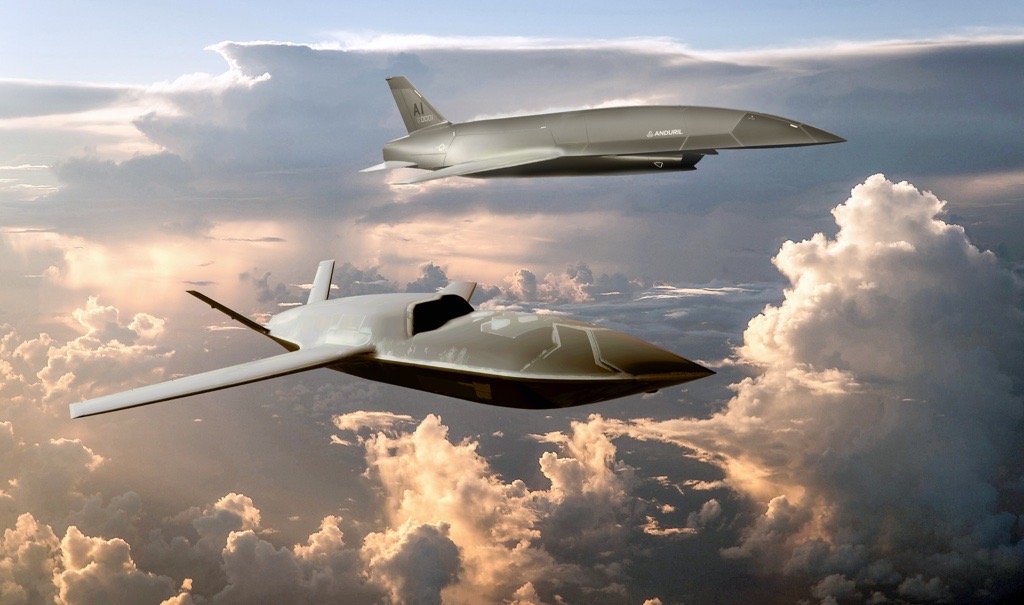
Craig presented data that predicted 30% of all combat aircraft delivered in 2036 will be a Collaborative Combat Aircraft (CCA). CCAs are autonomous drones that have many of the functions of traditional fighter or light bomber aircraft - just without the human pilot. Steve said “The most important thing about CCAs is not the aircraft. It’s the mission autonomy systems.” I believe Steve is right. I also believe this will drive significant A&D operational and design changes.
We all carry smart phones that become a different device each time we launch an application. The same hardware performs new functions simply because the software changed. This is called a software defined product (SDP). The hardware is important, but it’s the software that makes it into what it really is.
Think about an iPhone vs an Android. I could start a holy war if I said they are basically the same thing. However, apart from some Apple silicon, they are very similar from a hardware stand point. They both have cameras, some RF chips, some memory, an SSD, and a big touch screen. They both surf the web, send text messages, run apps, take great photos, play music and can even make phone calls. However, as an iPhone user, I have no idea how to use an Android. I see them as different products. It’s all because of the software. That is the essence of an SDP.
For most of the first 120 years of flight, our aircraft have been anything but SDPs. We have separate bombers, fighters, and cargo carriers. These planes are defined by the size and shape of their airframes. When we attach a company name to an aircraft like a Northrop B-2, or a Lockheed F-16 it is because that company designed the airframe. That will change in the era of software defined products like the CCA. In the SDP future, the mission systems will define the aircraft, the company that designs and integrates the mission systems will hang their name on the side of it.
I used to own separate devices to make phone calls, listen to music, take pictures and navigate through unfamiliar cities. Now I just use my iPhone for all of those tasks. My iPhone is a hardware platform that uses a software application to define its mission. That mission changes each time I launch a new app. Aircraft are about to have their smart phone moment.
Take a look at the airframes of exquisite class CCAs being designed today. They are starting to look more and more alike, kind of like the difference between an iPhone and Android. And just like smart phones, those CCAs will become a jack of all trades. We will see a common airframe and engine being used for jamming, air to air, air to ground, and even aerial refueling missions. To be fair - the F/A-18 Super Hornet is already flying all these missions with a common airframe today. I guess It’s ahead if its time.
This is not just an operational change. It changes the way aircraft are designed as well. I started my aerospace career at McDonnell Douglas in the late 1980s with an electrical engineering degree, and I wanted to be a systems engineer. I was in the minority. Back then, most of the people that designed aircraft had a degree in aerospace or mechanical engineering. They did fluid dynamics or structural design.
As the CCAs and other SDP aircraft become the majority of aircraft delivered, their airframes and engines will become more of a commodity - just like the touch screens and SSDs in smart phones. The aerospace industry will always need airframes and engines and the engineers that design them, but they might not be the heroes anymore. The heroes will be the mission systems engineers and the electrical and software engineers that design the components for those systems. Those mission systems will allow the same CCA platform to do reconnaissance, jamming, attack, and refueling missions.
Maybe we need a new term like “Smart Plane” - an aircraft whose mission is defined by the software application the operator chooses to launch.
Please tell me what you think in the comments. Do you agree? Do you have a better term than “Smart Plane”?