

Keep A Servant's Mindset with JP Nauseef - Part 2
The Rincon Horizons podcast is where we talk about what it means to reach the summit on your leadership journey. We want to help you lead better so your organization can climb higher. Dylan and Todd welcome JobsOhio President and CEO JP Nauseef to the podcast.
-
This episode of the Rincon Horizons podcast features a discussion with JobsOhio President and CEO JP Nauseef. JP details how Ohio’s unique privatized economic development model funds strategic business investments. The conversation emphasizes Ohio’s pivotal role in the modern aerospace and defense sectors, highlighting the state's efforts to attract innovative companies like Anduril and Joby Aviation by utilizing its robust supply chain and manufacturing workforce. Ultimately, the episode serves as a guide for leaders navigating complex growth strategies while maintaining a "servant’s mindset" to achieve long-term success.
-
The JobsOhio Model: J.P. explains the unique structure of JobsOhio as a private, nonprofit economic development organization.
Ohio’s Aerospace Heritage and Innovation: The discussion highlights Ohio’s deep aerospace roots—from the Wright brothers to Neil Armstrong—and its current role hosting major entities like Wright-Patterson Air Force Base and NASA Glenn.
JobsOhio’s Strategic Industry Growth: The conversation covers how Ohio is attracting cutting-edge companies like Anduril, Joby Aviation, and Sierra Nevada by offering a robust supply chain, a large manufacturing workforce, and specialized testing centers.
JP’s Leadership Philosophy: In the "Leadership Corner" segment, J.P. emphasizes the importance of a "servant’s mindset," advocating for leaders to serve their mission and teams while sharing credit and acknowledging mistakes.
-
JobsOhio: https://www.jobsohio.com
Rincon Aerospace: https://www.Rincon.Aero
DM.supply: https://www.dm.supply
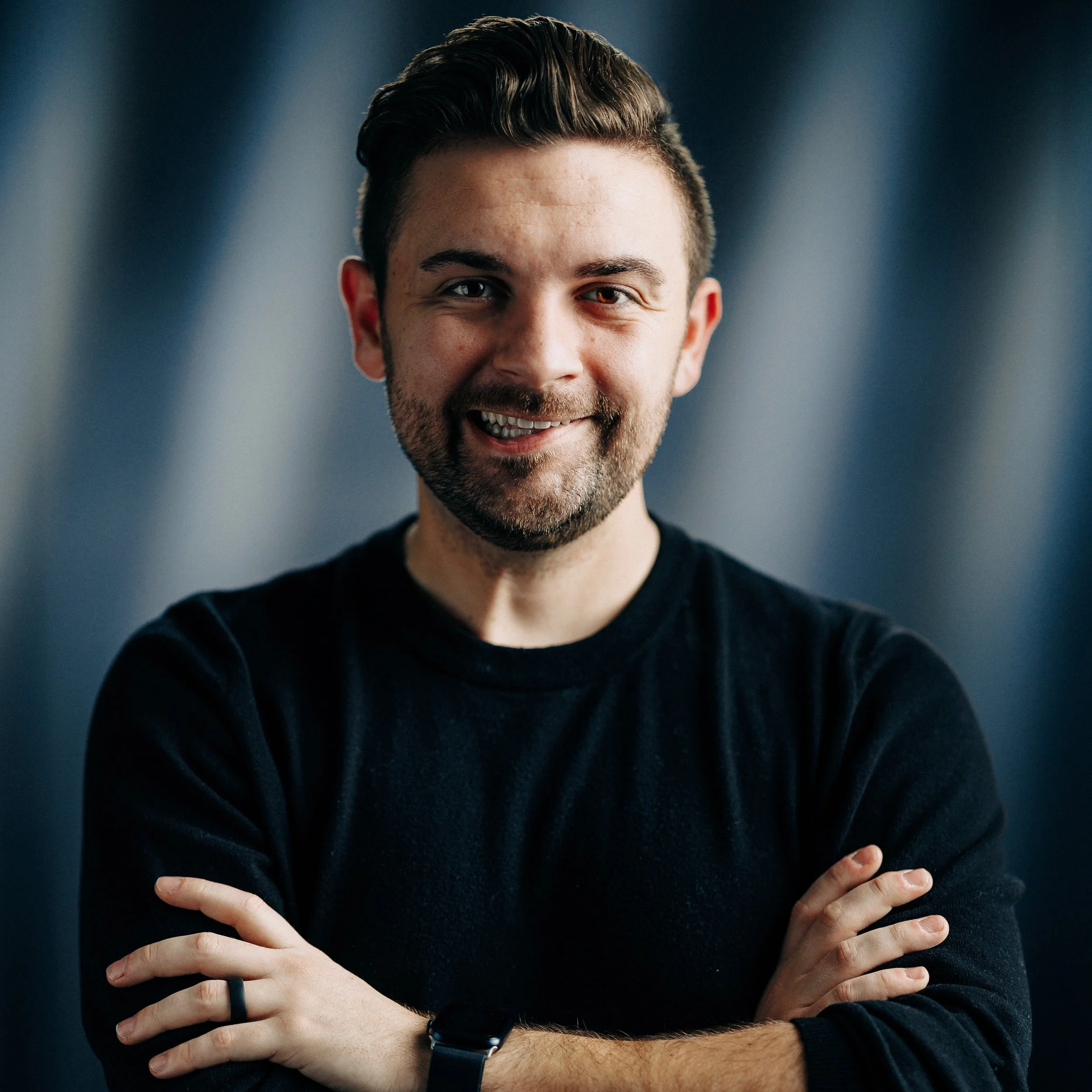
Moderator & Co-Host Dylan Mitchell
Dylan is the Brand Strategist, Creative Director, and Founder of DM.supply. He’s passionate about helping churches, nonprofits, and businesses of all kinds build brands that are clear, meaningful, and built to last.
Find Dylan on LinkedIn at: https://www.linkedin.com/in/dylnmtchll/
DM.supply Website:
https://www.dm.supply
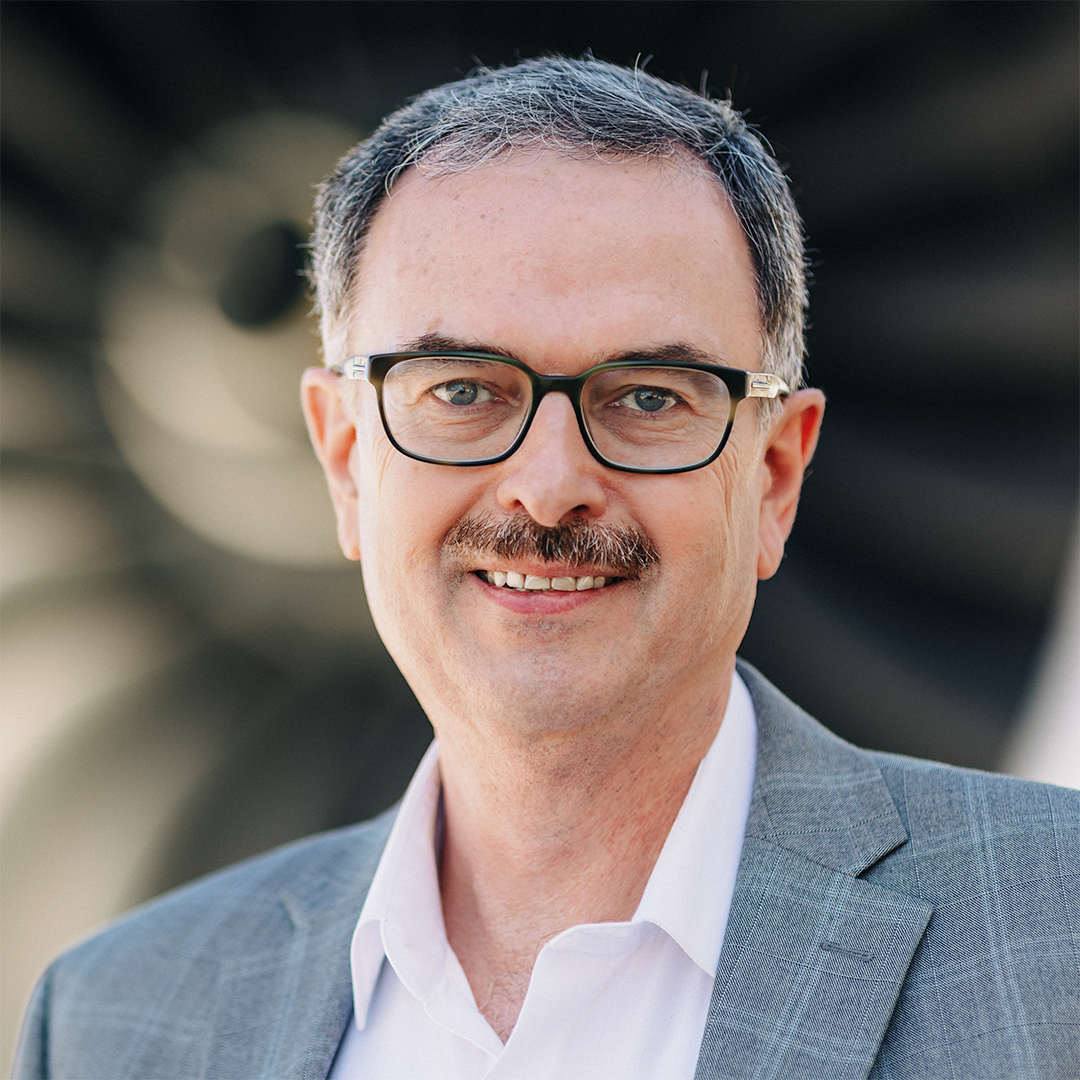
Primary Contributor & Co-Host Todd Tuthill
Todd is the Managing Partner of Rincon Aerospace - A consulting company guiding aerospace companies to exceptional.
Todd is an aerospace executive and systems engineer with more than three decades of experience designing aircraft flight control systems
Find Todd on LinkedIn at: https://www.linkedin.com/in/toddtuthill/
Rincon Aerospace Website: https://www.Rincon.Aero
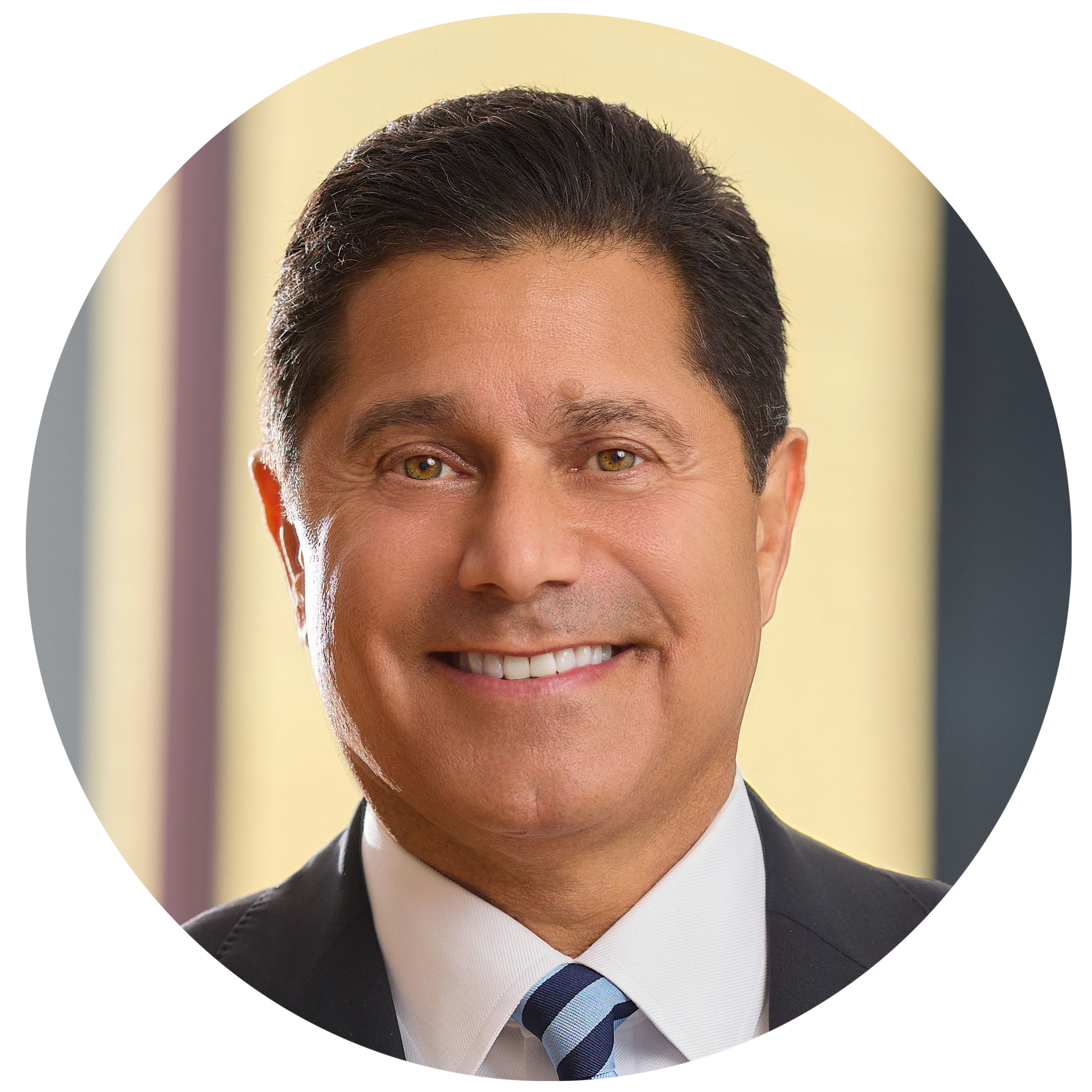
Our Guest: J.P. Nauseef
J.P. Nauseef is President and CEO of JobsOhio, the state’s private nonprofit corporation for strategic economic development investment and job creation.
Before joining JobsOhio, JP was Executive Chairman and Co-Founder of Krush Media, a full-service digital advertising and data company, was President & CEO of the Dayton Development Coalition, a management consultant for Deloitte, and served 8 years on active duty as a US Air Force officer.
JP earned degrees from the University of Dayton and the University of Southern California and was inducted into the Ohio Veterans Hall of Fame in 2024. He and his wife Carmen have 4 adult sons.
Find JP on LinkedIn at: https://www.linkedin.com/in/nauseef/
-
Keep A Servant's Mindset with JP Nauseef - Part 2
Dylan Mitchell
Hey everyone, I'm Dylan Mitchell and this is the Rincon Horizons podcast. This show is about leadership, what it really takes to grow, to adapt and to reach the summit over the course of your leadership journey. Our goal is simple, to help you lead better so your organization can climb higher.
Welcome back to the Rincon Horizons podcast. We're picking up right where we left off with Rincon Aerospace Managing Partner Todd Tuthill and JP Nauseef President and CEO of JobsOhio.
Todd Tuthill
JP, that's an incredible legacy. And I'd like to follow up on a few things you said and talk about some of the issues we're seeing in aerospace today. You said something earlier about working at the speed of business. And that really jumped out at me, the thing you're enabling these aerospace companies to do.
When I think about where we're at in the country right now, we're looking at, as I'm sure you're aware, a $1.5 trillion budget in 2027. And across aerospace industry, We're trying to figure out how we're going to do that. How are we going to go that fast? know you've had some really good success with Palmer Lucky and with the Anduril and you're putting together a whole new model around the way that works. And Anduril is right in the middle of, of I think some of that speed and some of that agility.
Could you talk a bit more about your relationship with Anduril? Arsenal One and how Arsenal One's gonna fit into that whole aspect of the US going faster in terms of scaling up to spend all that money that's gonna be there in 2027.
JP Nauseef
They're a great example because I think you look this we are a catalyst for the putting these deals together sharing what the value prop so these military and civilian men and women that do the acquiring and the research have what they need from a community in a state and companies like Anduril can move quickly and that we remove all friction that might be there from development land acquisition workforce acquisition etc.
And they do it all. The thing that's remarkable about Anduril, it is probably the largest and most prominent company in the defense industry that is striking out on new operational territory for the military and how they deploy high value assets. It's breaking new barriers on how the acquisition system views companies and views investment and capitalization of these kinds of businesses.
And that's the Air Force acquisition system. I mean, kudos to the Air Force Research Lab for down selecting to a company like this. I think that's groundbreaking that they did that. That's innovative just the way they did that. And I think the combined confluence that, we had been at the state community strategy for how to make it easy to be here and making sure the world knows that we're here for this industry. We've been at this a while. the timing of the intersection of all the work that's been happening in Ohio and the Dayton region around preparing the sites, the tools, the relationships with Wright-Patterson, growing missions there, protecting missions, making sure that they're aware, making sure our citizens are aware of the importance of these installations and the industry that they bring. So that when they came here, they came here after Joby and after Sierra Nevada. I would consider Sierra Nevada was patient zero for metal bending. It was hard to convince them to do it. They just don't do that. You we don't do that there.
But we were able to convince Fadi, the owner, to build a hanger. And we just did a ribbon cutting where they built their fourth hanger. And the customer came. And the didn't have to talk to us. They know the value proposition of being there.
Proximity, speed, when you can co-locate the people building it. And it's an iterative process, especially on these innovative developments that are new and groundbreaking. You have them with the acquirers, the operators, the threat identifiers, the maintainers are all together. Proximity equals speed. And there's only one place you can do it with that much robustness, and it's right here.
Dylan Mitchell
Let's stay on advanced air mobility. Where is Ohio actually winning right now? I know we talked a little bit about why companies choose to scale ⁓ there in Ohio and then some of the incentive there. Even as I think about, we mentioned at the top of the show, Artemis II with NASA Glenn Research Center playing a role in propulsion, power testing, even outside of advanced air mobility. ⁓
Ohio is not just a part of the story with NASA Glenn, it's contributing to some of the most advanced aerospace work happening right now. How do you think about Ohio's role in programs like that and how does that translate into long-term economic and industry growth for the state?
JP Nauseef
These are massive opportunities and there's an element of risk for all of us in these, right? Because this will play out again in a very nonlinear way. There's big bets being made by industries, by governments globally into these things.
And how it exactly plays out, we don't know. But directionally, these are trillion dollar market opportunities. we've, as a state and community, we've been looking at this since right after the last BRAC in 2007 and eight. We were already studying what is our arc through 2020 going to look like? And one of the things we had identified because of the people that we surround ourselves with, you we need to look at these unmanned aircraft, these drones. They're going to be something. And what do we need now for the next evolution where we think it's going to unmanned? A mix of manned, unmanned, and space.
We think we need to be outfitted and ready. And one of the things was, let's go get an FAA waiver so people can fly these. So industries and governments can test and fly them without having to get in line to go to a test facility halfway across the country. So we can remove cost and proximity for industry partners that might want to build it near a customer at the Air Force Research Lab and then test it right there. That's good for the customer. And that's good for the industry partner. It also allows for innovative new entrants that don't have depth of resources to try new things and do new things.
We laid out a strategy to do that back in 2008 or 2009. And then advocated with the state, which turned in to the SkyVision, that's just this mobile air traffic control facility with the FAA, which then turned into the National, Advanced Air Mobility Center of Excellence in Springfield designation. And that's how we met Joby. And that's how we met Beta.
They were coming and using we see that as, laying in that infrastructure, even though we don't have a, no one can predict the future 20 years out. These are smart bets the community is making. Not just one organization or one person, because our federal elected officials had to weigh in for us. Our state elected officials had to make resources available for SkyVision.
The local community rallied around to create a strategy that identified that as something important. I think coming off the BRAC experience, they knew if we do our homework and we're smart about it and we advocate together, we can accomplish these things. So that was a long-term process laying in that infrastructure. then JobsOhio then, in particular under the DeWine administration, when we added the military and federal segments and...
We're focused on the intersection of where manufacturing meets the military and federal customer, meets aviation and aerospace. That's an Anduril. That's a Joby. That's an SNC. We were able to build the tools and the resources to put that vision and those dreams into action to get a company to be competitive for a company like Joby and Sierra Nevada and Anduril then to come here to leverage all of it.
We removed, from the table because we were able to be competitive. And usually we're not the richest offer, but we are a competitive offer and we follow through after the ribbon is cut. We're there when they had to stand up the building when they have to deal with zoning, when they have to deal with any agency, any friction that they run into the state. JobsOhio and the locals work together to remove as much of that friction as we can so the company can deal with the challenges they have in business and in technology development.
Todd Tuthill
I want to put myself in the place of these companies looking to expand their facilities, expand the manufacturing. They're looking at all the things happening in aerospace and defense and commercial, and they're saying I need to make a capital facility they're trying to figure out how and when to pull the trigger. Can you give them, those companies, some advice on how they should think about that?
When is it time to build? When is it too risky to build? Maybe when should they stay where they're at? Because I know you've worked with a lot of these companies making those decisions and building facilities. What does it take to make that decision to invest at $10 million or $20 million or $50 million in a new facility? What are the thoughts that should be going in their minds right now?
JP Nauseef
It's always slightly different for each company in each industry. But if we're in the aerospace industry, a lot of times the business development process is working with federal budgets and line items, sometimes two year, a lot of times one year. And the business development teams at these companies are great. We...have great relationships with them. We have with their customer and with our congressional delegation and with leadership in the building. So we've got a pretty good feel on how these markets develop, even the government will never guarantee, hey, this contract four years from now.
There's a level of certainty you do get after being on the repeat cycle for many, many of these different acquisition cycles. what we require as an economic development entity are commitments. If we're gonna put an incentive dollar in to help that company expand or to incent them to relocate, we'll require, here's the way our commitments look, because we say we have to produce a return.
It's a shared risk that we take with the company. And the way we calculate the return isn't not a return to JobsOhio's accounts. It's a return to Ohio. It's a very conservative calculation. It's the payroll taxes that are generated from the net, the future payroll taxes generated from the net new jobs committed and started and delivered by the company are always more over time than the incentive dollars that we used to catalyze the deal in the first place.
And the more strategic we view, it's part of the art and the science of the business, the more strategic we view that deal, the longer the payback period, longer to get the break even. I can tell you of the 3,000 plus deals that we've done in the history of JobsOhio, the average payback is roughly less than two years.
Todd Tuthill
That's pretty incredible in the business world.
JP Nauseef
It's pretty incredible and those deals, we've shredded the numbers on them, have dramatically over performed. In some cases by 300% because when those companies get here, they're even more competitive than they thought they would be. They get the right workforce. It's productive and affordable.
Their workforce stays longer because they can afford to live there and they have a great quality of life. They get benefit of supply chain and proximity to their customer, access to resources and research capabilities, and they're successful. Knowing that we have to have that level of commitment from the company and from us, every deal is a shared risk. And then if the deal goes well,
That's what we want. We want success. We want to position that company for success upfront. So we talk through all this upfront. always some element of gray. Sometimes there's a locked in contract. But even sometimes those go away for customer contracts. Not often.
I think our deal success rate is between 90 and 95 % that we end up going into some kind of performance and compliance. We have internal auditor that make sure that the companies are fulfilling their obligations and we make sure we fulfill our obligations. Very high success rate. But for the ones that don't follow through, we go through and have some level of clawback of the resources. Again, the notion isn't to be Machiavellian because we want the companies to succeed. So we're always on the bent of how can we structure this so you can be successful. And sometimes they're just not. And we need to be good fiduciaries of the money that we're entrusted with and we make sure we have a compliance and performance activity that ensures that.
The success rate's been so high, our success, I think, has helped the public tolerate something that was uncomfortable when it was privatized and all these things happened. I think it's generally acknowledged that this does provide us a competitive advantage, and it's one that Ohio needs, and it's one we're capitalizing on.
Dylan Mitchell
That right there sounds like a hallmark of leadership.
And on the topic of leadership, since this is a leadership podcast, I think that this is a perfect segue. For anyone who follows the show, you'll know that one of the segments we come back to on every episode is called the leadership corner. it's a moment actually shaped how you lead and that could be a failure, a turning point, something that forced you to make a change. When you look back at your career, JP, at your history, is there like a standout moment for you that changed how you show up today as a leader?
JP Nauseef
There's probably several, but there's two that I'll call out that I think had a big impact on me. First was the person I married and my decision for us to have joint priorities around our family and not sacrificing our family or our community obligations or commitments while we still wanted to have professional and business success. That person that I married, my wife Carmen, our four boys that we raised here in the middle of the Midwest all these things were happening.
A great decision professionally, probably the most significant was my decision to leave the Air Force to do that because growing up in an Air Force family, you I knew what it was like to move around. And I think a lot of that drove me into the big decision of, I got asked to help with the BRAC in early 2000s and that decision to leave, a booming tech industry that I was in the middle of and do that because I think the impact on me as a military dependent combined with my experience active duty and seeing the whole expanse of how these people serve, the impact on their families, how important that was to me and to the broader global environment in the country, the decision to get into economic development was a big deal for me. It really changed the course and helped me really understand why I made the decisions I made.
Having grown up in a family that I grew up in and then choosing a small Midwestern city to raise four boys in that environment. And then to spend most of my professional life helping that community configure itself around supporting military veterans family and the industry partners from it that would come from it. So those were big and impactful moments in my here talking to you now and a great opportunity. to be able to be part of this team that's now doing this all over the state and hopefully making a positive impact on those whose parents are serving, that show up in a town. And the great work that their parents are doing impacts our nation and our economy and all of our institutions. And that family is at home and comfortable and knows they're valued by our state when they come here.
That's the kind of impact I think the people in Ohio like to have, they support that service, they believe in that service and they want to value it. And now they have a mechanism to value it. it's growing. And I think after the pandemic and after decades of out migration, I think those values are coming back into style.
Dylan Mitchell
JP, as a military spouse myself, I'm not from Ohio. As we record this, I'm sitting in California, but just listening to your heart from military families, thank you. Thank you for what you and JobsOhio are doing. It's beautiful.
JP Nauseef
Well, by the way, we love California, we love New York, it's a great country, but there is a place for Ohio in that great country and we believe we are the heart of it all. And I think that's a good tagline, but thank you, thank you for serving. When the spouse serves, or when the member serves, the family serves, I mean you know that. So thank you, right back, and it's an honor and privilege, and there's no question.
Dylan Mitchell
Todd, before we wrap up on this show, do you have any final thoughts that you want to leaders with who are listening?
Todd Tuthill
I guess I want to say if I think about the podcast, and the thing that jumped out at me, the thing that impressed me most, it's, it's the pride that JP really has for, you for Ohio for what what's happening in the Midwest and aerospace, I think it'd be easier for people to say, okay, that's his job, right? He's the CEO of JobsOhio, he's paid to promote Ohio. Okay, I get it. But, in this an audio podcast, but I can see his face while he's talking.
This is a gentleman who's genuinely proud of Ohio, proud of the place that Ohio is showing an aerospace and, I had done some research for the podcast, but I learned so much about what Ohio is doing for the current state of aerospace in the country. When a lot of people think of aerospace, they think, yeah, it's happening on the coast, right? It's happening in Los Angeles. It's happening on the East Coast. There's so much happening in Ohio.
And I think that was one of the big takeaways for me. It's just the key role. It's not just the history, the rich history that Ohio has in aerospace, but the key role they're playing today, right now, in bringing aerospace and all these great things that are happening in the country and the world right now. So JP, thank you for coming on. Thank you for your service to the country and thank you for what you're doing for aerospace in Ohio. It's incredible.
JP Nauseef
Appreciate the opportunity to be with both of you. Thank you so much.
Dylan Mitchell
JP. Since you're our guest, we'd love to give you the last word on the final thoughts that you'd want to leave leaders with? maybe leaders specifically who are navigating growth or for leaders who are building something right now, especially those who feel kind of stretched thin. Maybe what's one boundary habit mindset shift, whatever you've got would challenge that you would challenge them pick up this month that might change it.
JP Nauseef
So first, I don't claim to be a great leader. I think what I would tell people is be a servant. Serve the mission, serve your partners, serve your board, serve the people that are part of your team. Keep that mindset that it's not about you. It's what you're trying to accomplish, who you're trying to accomplish it with. Is it just? Is it right?
You doing the best you can do for all those considered? Do you acknowledge mistakes? Do you celebrate victories? Do you share credit versus take it? All those basic things, those just basic stuff. I think you keep a servant's mindset, and good things happen. They've always happened in my life if I have not made it about me.
Dylan Mitchell
That's good. That might be the quote of the show right there.
Todd Tuthill
I was just thinking that that's probably the show title right there.
Dylan Mitchell
So before we wrap up today, if you want to learn more about JobsOhio head to https://jobsohio.com will also link JP's LinkedIn and the show notes. As always, thanks, Todd. And thanks to everyone who's listening. At Rincon Horizons, we break down the decisions and disciplines that shape leadership at work at home and everywhere in between. Our goal is simple to help you lead better so your organization can climb higher. If this episode challenged you share it with someone who needs to hear it.
You can find more about Rincon Aerospace or connect with Todd using the links in the show notes or Rincon Aero. That's R-I-N-C-O-N dot Aero. I'm Dylan Mitchell. You can learn more about my work at DM dot supply. Thanks for listening and we'll see you next time on Rincon Horizons.