

An Immense Challenge for Our Species - with John Nixon - Part 2
The Rincon Horizons podcast is where we talk about what it means to reach the summit on your leadership journey. We want to help you lead better so your organization can climb higher. Todd and Dylan welcome John Nixon, the Global Group VP of Process Industries at Siemens Digital Industries Software, to the podcast.
-
Every generation believes its technology is the one that finally breaks us. John Nixon has heard it before — from Frankenstein's electricity to whale oil to kerosene to electrified streetlights — and he knows our species has always risen to the challenge. In this episode of Rincon Horizons, the Siemens Group VP of Process Industries argues that AI is simply the latest chapter in a very old story: humanity learning to hold immense power responsibly.
But the challenge Nixon describes isn't abstract — it's showing up in real time, in real infrastructure. Data centers are straining power grids, nuclear is roaring back as a serious option, and countries are racing toward fusion on compressed timelines. Complexity, as Nixon puts it, isn't the exception anymore. It's the norm — and it's only accelerating.
Todd and Dylan press John on what it takes to lead through that kind of moment: not fear, not retreat, but a willingness to run toward the fire. It's a conversation about the scale of what's ahead for energy, AI, and industry — and why meeting it starts with the same instincts that have carried humanity through every previous challenge.
-
Global energy transition
AI power demand
The power needed to explore the moon and mars
Why real leaders take risks
Mentoring the next generation
-
The AZ Techcast: https://www.aztechcouncil.org/podcasts/
Nikola Tesla World Wireless System. Wireless transportation of power: https://en.wikipedia.org/wiki/World_Wireless_System
Substack: https://substack.com
The Wall Street Journal: WSJ.com
Playing to Win, How Strategy Really Works: https://a.co/d/07wEEYMe
The collective works of William Shakespeare: https://a.co/d/08b2uXrh
Sherlock Holmes Series Complete Collection by Arthur Conan Doyle: https://a.co/d/00rPDP3Z
Frankenstein by Mary Shelley: https://a.co/d/0eO9yhbU
Footnotes of History Podcast: https://www.youtube.com/playlist?list=PLJsPQw6y4w8faZ1bQ_LVZ_H7nvkhJhbP2
Naval Aviation Ready Room podcast: https://podcasts.apple.com/us/podcast/the-naval-aviation-ready-room-podcast-with/id1827033159
The Industry Forward Podcast: https://blogs.sw.siemens.com/podcasts/category/industry-forward
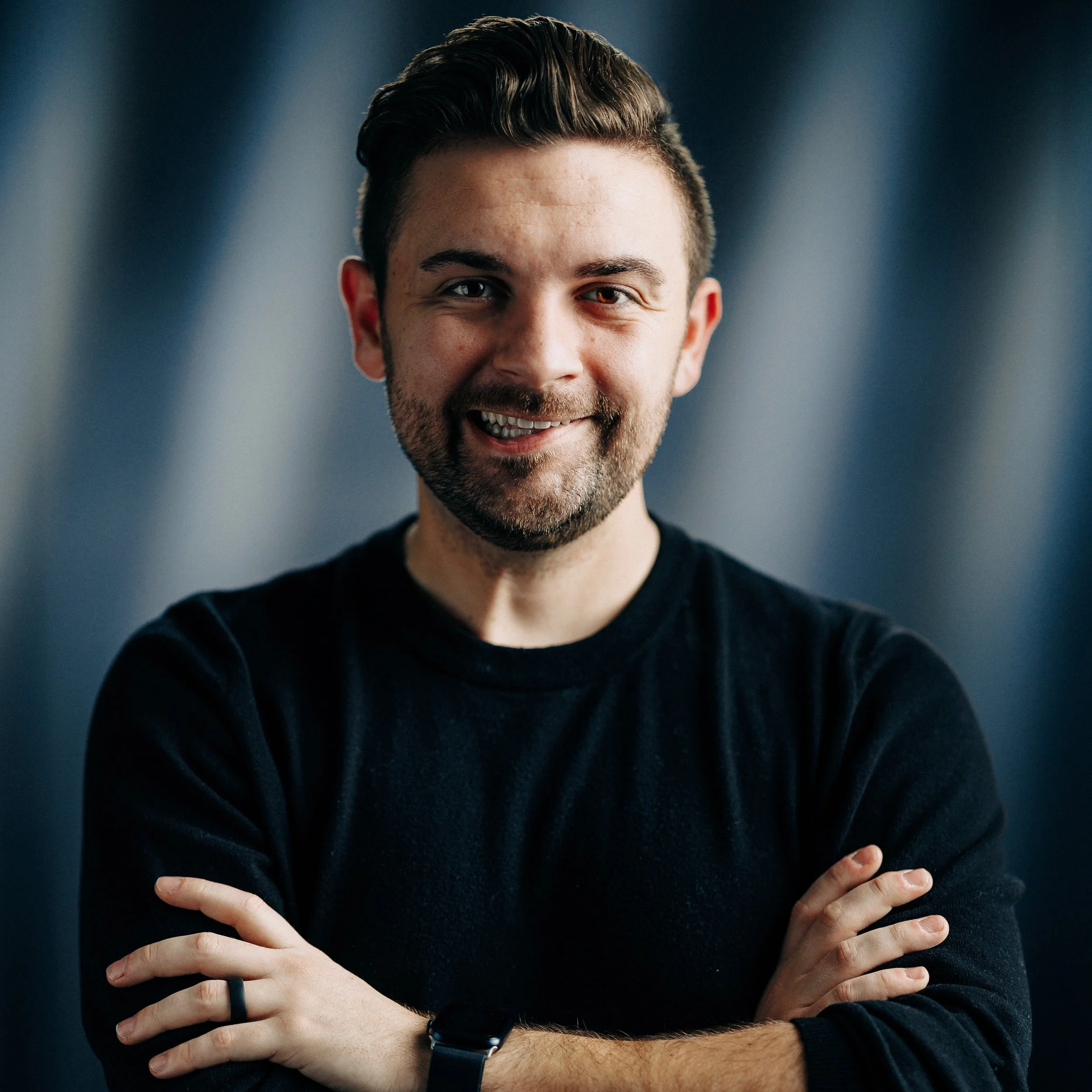
Moderator & Co-Host Dylan Mitchell
Dylan is the Brand Strategist, Creative Director, and Founder of DM.supply. He’s passionate about helping churches, nonprofits, and businesses of all kinds build brands that are clear, meaningful, and built to last.
Find Dylan on LinkedIn at: https://www.linkedin.com/in/dylnmtchll/
DM.supply: https://www.dm.supply
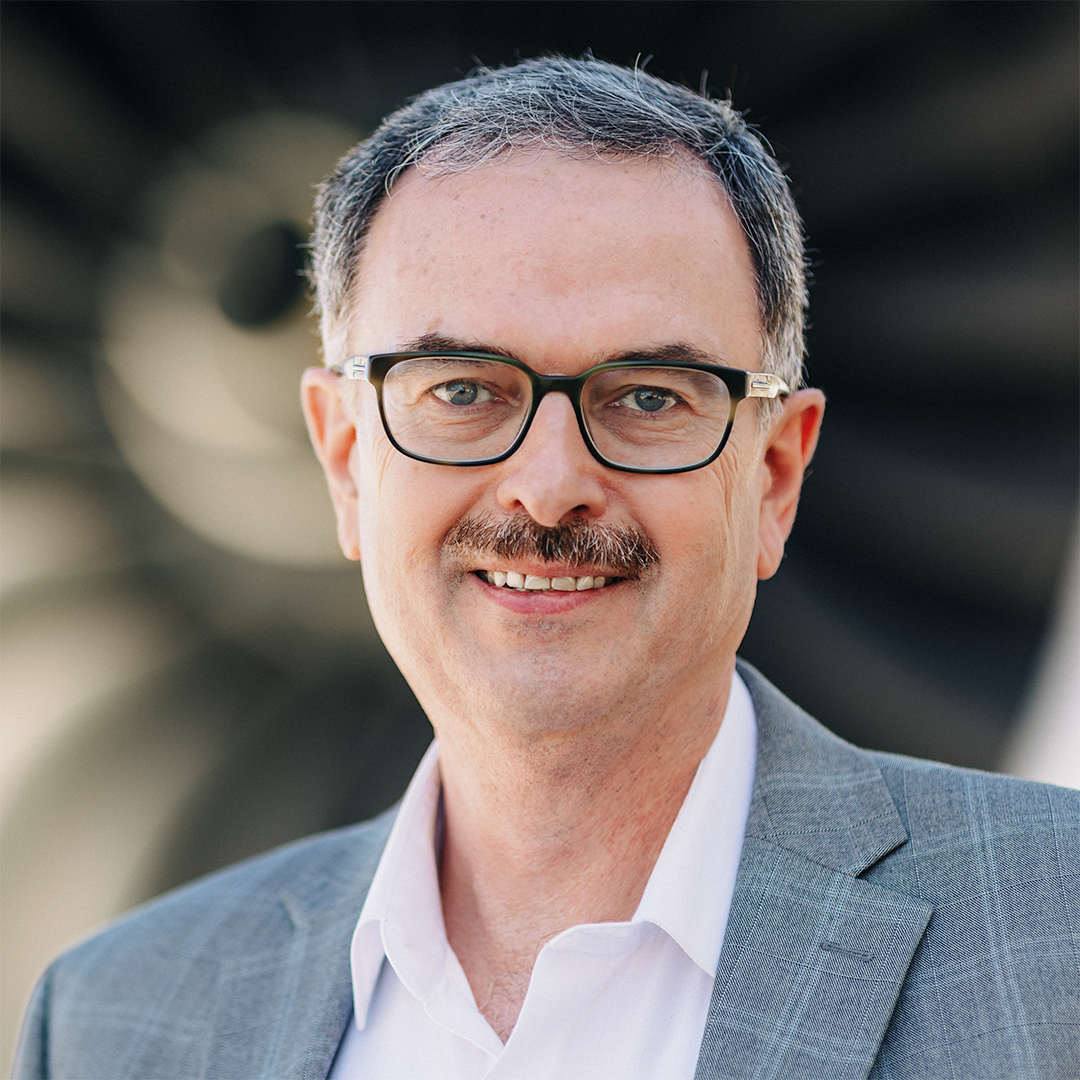
Primary Contributor & Co-Host Todd Tuthill
Todd is the Managing Partner of Rincon Aerospace - A consulting company guiding aerospace and defense companies to exceptional.
Todd is an aerospace executive and systems engineer with more than three decades of experience designing aircraft flight control systems
Find Todd on LinkedIn at: https://www.linkedin.com/in/toddtuthill/
Rincon Aerospace: https://www.Rincon.Aero

Our Guest: John Nixon, the Global Group VP of Process Industries at Siemens Digital Industries Software
John leads a global team that helps process industries leverage digital solutions that enhance efficiency, accelerate innovation and achieve sustainability goals.
John has over three decades of experience in strategy, operations and technology deployment for energy, chemicals, life sciences and CPG. He is well versed in the operational and business pressures of industry, including regulatory demands, decarbonization, talent gaps and the push for innovation.
The Industry Forward Podcast: https://blogs.sw.siemens.com/podcasts/industry-forward/
John on LinkedIn: https://www.linkedin.com/in/johnnixon/
-
An Immense Challenge for Our Species - with John Nixon - Part 2
Dylan Mitchell
I'm Dylan Mitchell, and this is the Rincon Horizons Podcast. This show is all about leadership, what it takes to grow, adapt, and keep moving forward when the stakes are high and the path isn't always clear. Our goal here is simple. We want to help you lead better so your organization can climb higher.
Welcome back to the Rincon Horizon's podcast. We're picking up right where we left off with Rincon Aerospace managing partner Todd Tuthill and John Nixon, Group Vice President of Process Industries at Siemens.
Todd Tuthill
We've been running cars and trucks and buses and trains on low carbon alternative energy sources for quite a while, many years. But it's really not the case in aerospace. and aircraft are still almost entirely fossil fuel based. What's it gonna take to change that from an energy standpoint?
John Nixon
Todd we've talked about this before, but we'll sh we'll share we'll share it with our audience. Yeah, and and I loved working with you on vertical takeoff and landing. we'll talk about that here for a moment. I think you are starting to see real movement in aerospace. You would probably know better than I, being a lead consultant in this industry. what I see is there's electric aircraft now flying today.
Todd Tuthill
We have. We've talked about it quite a bit before.
John Nixon
Now it's primarily small, Very short range aircraft. I've seen headlines on, training aircraft. The work we did on vertical takeoff and landing or VTOL. You're seeing electric aircraft there. and maybe short hop, regional demonstrations. And these are real. I mean, it's not theoretical, but there's I think there's a distinction and something our audience needs to be cognizant of, there's a tremendous limiting factor here of energy density. Jet fuel has around, forty, forty five meg what is it, megajoule per kilogram? Whereas batteries are like nine tenths or or maybe one megajoule per kilogram. I mean, you're looking at somewhere between forty and a fifty X gap.
Todd Tuthill
Yeah, yeah. It's a much higher energy density. And the cool thing about jet fuel is when you burn it, the the weight goes away. And the your aircraft gets lighter and a battery doesn't get lighter when the electrons move. it weighs the same, full or empty.
John Nixon
Yes, that's
And if I go back to my military days, I always think about what about refuel? You can't recharge like you refuel, in flight.
Todd Tuthill
Well, Tesla thought you could, but I don't think we've ever realized what Tesla came up with. But may maybe someday. Right. You're right. Y you are correct. Today we can't we do not have that technology today. That's correct.
John Nixon
Well, I may and again, I I'm just speaking from you know what we see in front of us today and and
Dylan Mitchell
Yeah.
John Nixon
well, and you know, so I you see a segmentation, right? Flight training, air mobility, regional hops, that's great. But if you look at commercial aviation, long haul flights, heavy payload missions, I mentioned the military. The math is difficult because you'd need orders of magnitude, more battery mass, But what does that do? What's your trade-off then? Passengers and cargo. You have to think about that.
We've talked about this briefly in the past, Todd. And I was thinking about this, before I joined you on on this episode today, which is, hydrogen can it has some promise, It is three X the energy of jet fuel by weight, but, it requires four X the volume. and of course, you have to keep things cryogenic. it's very much a challenge around hydrogen. So I that's not a a silver bullet right now.
Todd Tuthill
It is and we don't have all this infrastructure of hydrogen just flowing everywhere through the world so that we can just put more hydrogen in our aircraft if we want to, a lot like we can electricity.
John Nixon
That's right. I mean whole different handling
Todd Tuthill
So you tell me there's no hope, John? Is that what you're telling me? 'Cause
John Nixon
No, no, no, no, no. I think what you're gonna see what is it in J.R. Tolkien? Not one ring to rule them all. There's not one fuel to rule them all. It just I think there's a segmentation and you'll you'll see electric makes sense in, maybe crop dusting, Versus, moving, four hundred people, ten thousand miles.
Todd Tuthill
Right. That's right. That's right.
We're a long way from an electric aircraft moving a a whole bunch of people a long distance. but what about nuclear? Because the the thing that's so interesting to me, and John, you and I have talked about this before. nuclear powered aircraft scare a lot of people, but I just think that when I think about energy density and all these kinds of things, if we can just get these small modular reactors a little lighter, a little smaller, a little safer.
Are we gonna see those on aircraft? Do you think in not in the next five years? I don't think the FAA's gonna certify that, but maybe eventually.
John Nixon
Look, anything is possible. We already have small module reactors on submarines. They're already in aircraft carriers. They're already in close proximity to humans with that we move over long distances in harsh conditions called, the ocean. We've already done that. But it's kind of like, as much as I hate to acknowledge it, but there's the emotional component, to our species, which is, you tell people about that and then but then when you remind them we've been moving,
Todd Tuthill
There is.
John Nixon
hundreds and thousands of humans in close proximity to small module reactors for decades. And it's called US military. In stormy conditions, in the middle of the Pacific and Atlantic. I think you we'll have to, like we've done with small module reactors on terrestrial applications, like we're doing now, where it's now becoming part of the psyche of our species that you know what?
It is a viable option. It is one that we're going to manage and we're going to manage correctly. The technology is vastly different than it was in nineteen seventy. So will we see it in aircraft? again, it depends on weight and payload, doesn't it? It depends on whether we can get that much energy density safely into a small footprint.
Todd Tuthill
We've
Dylan Mitchell
That kind of answers a question that I had too, kind of thinking about public perception and reception, I guess. I can talk to people now, and I won't name names or places, that are still very on the fence about the the idea of an even even an EV. I think many people are much more on board with the idea of EVs. but whenever you translate that into like alternative fuel for aviation, how long do you think, it takes for the public to be like, well, this obviously we would do it this way. It's not like it's not theoretical anymore. We're just gonna do it that way now.
Todd Tuthill
Think about this, Dylan. Let's play suppose. you go to the airport next week, you get on the plane, and you say, Welcome to Autonomous Airlines. this is the first aircraft, we don't have a pilot anymore, the jet's just gonna fly itself. if that announcement was made, how many people would get off the aircraft? Probably a lot of probably all of them. But the reality is, the way aircraft operate today, ninety-five percent
Dylan Mitchell
Probably all of them.
Todd Tuthill
of the flight that you just took last month, that John just took last week, was operated autonomously. and an aircraft can operate almost entirely autonomously now. I have pilots listen to this podcast too. I don't want to don't want to get them mad at me. and I've talked to pilots about this and they say, well, the a key reason to have pilots in not just one pilot, but two pilots in the cockpit is for safety, because there are things that that autonomy cannot do.
And the pilots are there for the bad things that happen and certainly that they do, and we haven't solved all those problems yet. but we're we're working towards a future where we're gonna solve those problems and and like John has has said about energy, it's true about a lot of technology. a lot of times the technology gets there way before the public perception and acceptance will.
Who wants to have a nuclear energy source flying over their house all the time that might crash down on top of it. Well, that's a scary thing to happen, but the reality is that doesn't happen very often. It's a matter of perception, it's a matter of safety, it's a matter of technology.
John Nixon
Well, there's thousands of gallons of jet fuel flying over your house all the time that, you know, I think it's just a matter of education, perception. look at Tesla, it wasn't like somebody just snapped their fingers. People started to purchase them and then it was found that, my gosh, I'm starting to lose my fear of not being able to find a charging station. And so behaviors change we haven't seen the elimination of fossil fuel vehicles. You still see those and you're gonna see it for some time. It's it's not something that happens literally overnight. It's not like the automobile replacing, horses. Now that was a dramatic shift. If you look at, you can find pictures of.
New York City, where I think over the span of 18 months, it went from all horses to all cars. There have been those moments. But for us, I think when it becomes to electrification and sources of power, there hasn't been, that silver bullet moment, but it's over time. Now I see Teslas everywhere, I see Tesla vehicles all over the place. And people use them especially for short hauls all around the city.
It's just a matter of time, I think, before we see growth around electric aircraft. But again, I go back to what we're talking about now, which is the trade offs you have to make and the energy equation it's the gating factor, if you will, Yeah. right.
Todd Tuthill
It all comes back to power. It all comes back to power.
John Nixon
Energy has had to operate at scale under risk for a long time. that teaches you discipline. Discipline around safety, you mentioned that earlier, discipline around asset management, discipline around long life cycle systems. And I think aerospace and defense can take a a lot from that, especially as systems become more complex and and they're software driven. the other big lesson is you really can't separate operations from design.
The best companies today are closing that loop. what they learn in the field informs how they design the next generation. You hear the term digital thread a lot. And quite frankly, that is the analogy we're drawing here, is that there is this thread back from, field operations into next-gen design. But you've seen that in aerospace, over decades where there's always constant improvement. And so I think we both are are following the same path of.
With ever growing complexity comes an ever-growing demand of high fidelity navigation of the of that complexity, so that if I'm having issues, or it's not always has to be negative, if I find something's working really well, I need to be able to sift through the layers of data that are created, and be able to find those insights that lead to better design, and that better design leading to better operations. So
I don't know if it's as much what aerospace can take from energy. but I think we're both faced with the same degrees of complexity, different environments, different scope of work, different challenges, when you look at the complexity of a Boeing aircraft, You've shown me that before. I'm like, my goodness, And when I look when I can show you the complexity of a chemical plant at, scale, and it's like, wow.
Different orders of magnitude, but like I said, I've seen a lot of aerospace people coming into energy. it's an exciting time.
Dylan Mitchell
John, if you don't mind, let's shift over into leadership for a minute since this is a leadership show. you've invested a lot of time in developing future leaders through mentoring, university partnerships, and the work that you've done with interns over the years, as we talked about in our our pre-production meeting. why has that become such an important part of how you lead? And as a follow-up question to that, when you look at the next generation entering into the workforce.
What do you think experienced leaders owe them right now?
John Nixon
This means a lot to me, this question. for me, this is personal. I've had points in my career where I didn't have a roadmap. I had to figure things out the hard way. if I can shorten the curve, for anyone, even a little bit, that matters. what leaders owe the next generation right now is clarity and opportunity. Clarity about what skills matter,
And opportunities to actually apply them. You mentioned that I have interns. I've got every summer now, for the last three summers, I've been given the opportunity by Siemens to take on high school interns. I cannot tell you how amazing they are right out of the gate. If we had any fear of handing the baton to the next generation, that's gone. Because the innovation I've seen has been out of sight. it's outstanding.
And the beauty is we're bringing in high school and college interns. We're not telling them, fetch my coffee. We're telling them, I want you to reverse engineer a chemical plant. I want you to learn how to simulate the handling of materials in a factory floor. And I want you to help design it. I want you to help improve that design. This world that we're in, it's changing fast, AI, we've talked about new energy systems, new ways of working.
It's not just about teaching, it's about creating these environments where they learn by doing. And I get so excited about if I just give me a moment. I'm gonna be selfish for a second here. A couple of summers ago, we had a tropical storm come through Houston, knocked all the power out for a week. And it was the first week I had my interns. We had only had a couple of days to just get started, and then all of a sudden I can't reach them,
So I'm sitting here freaking out, thinking, my gosh, I've got to get online, I've got to get online, I've got to, we've got to get back up and running here. And I'm getting a little bit of cell service if I go all the way down to the parking lot and I'm sitting outside of Starbucks and having a coffee and I'm on their Wi-Fi. but when all the power came back, and it had been about call it four days, the shyest person on the team, she had stepped up, organized all the interns.
Had taken all of the point cloud scans we had of a of a chemical plant, had subdivided the work. So different people were doing the reverse engineering, which at the time was very manual, and were going through that effort, had taught themselves our software, gone out, had figured out how to get on YouTube, even though we didn't really have any power anywhere. But somehow, somewhere they had gone to a Starbucks somewhere, and they started teaching themselves.
And after four days, they had gotten through about a third of the chemical plant, reverse engineering, and teaching themselves that. And I remember looking at her, and I was just big grin. And I'm looking at them on Teams. We're all talking. And I had come on with a, a full head of steam. I was like, okay, we to get started. And they were hey, John, John, John, hang on, hang on. Let's take and so they take me through this presentation. And at the end of it, I'm like, Are you just telling me, old man John, get out of the way? And of course they're all laughing. And I'm like, could you couldn't be?
More excited. So here's what I did though. maybe she's about to learn something if she listens to this podcast. I wanted this young woman who, again, just out of high school, had just graduated, was hadn't even started her freshman year yet, was about to at the University of Houston as a mechanical engineer. And I had wanted her to present to an extended team on my Microsoft Teams, like three, four hundred people all around the world.
This process they had come up with that at the time we needed to be able to show efficacy around being able to reverse engineer, consume it, put it in our software. and I figured if we can do it with high school graduates, people will understand this is something that's tangible and real and it's a capability. So I told her, I want you to now go through the process you and your team have created with all these people. She was like, I can't do this. I can't, you there's too many people. And I said, Okay, I'll tell you what. I'll go through it online.
You be on the call with me. And with they ask questions, I don't have the answers to. Can you do that? yeah, I can do that. So five minutes before we started the call, what did I do? I told her, my laptop's down. I can't do the presentation. I need you to step up. I need you to say, I need your help, please. So she said, All right, I got it. Of course, I don't think she put two and two together that I was actually communicating to her through my laptop at the time that I was saying this. but that's okay.
She knocked it out of the park, it's this kind of investment that is so rewarding, To see how no matter what challenge I've thrown at the you can't say kids anymore, These young adults, not only do they step up to the plate, but they surpass all my expectations. So we as leaders, we absolutely must invest in that next generation because they're ready for it. They're ready to step up.
Dylan Mitchell
Wow. That's I mean on a much more minor, minor scale. I know with my years in church, I've had multiple interns over the over the years and I would echo a very similar sentiment It's so rewarding for me. It almost feels selfish on my end that I continue to want interns because I enjoyed talking to them. I honestly I enjoyed what I learned from them too. and even, at that level looking at it as like, Hey, this is a two way street. You're teaching me just as much as I'm maybe teaching you and helping you.
John Nixon
One hundred percent. One hundred percent. You learn by teaching and and vice versa. So it's just amazing.
Dylan Mitchell
One thing we like to come back to on every episode is a segment that we call the leadership corner. Think that's applicable, kind of transitioning out of that. I think that every leader has a few moments in their career or in their life, even that they can point to and say, that changed me. Maybe it's a risk you took, maybe it's a mistake, a challenge you didn't feel ready for. When you think about your leadership journey, John, what's a story that still shapes the way you lead?
John Nixon
I think you learned earlier about some turning points in my life that have formed me. I will say that if I may again be slightly selfish, it's not so much just one single moment, I would say. I would I would say that I have had to step up and do things that were about taking risk,
And it wasn't just about taking risk, but actually seeking it out and embracing it, And then working through it. I talked about the program management office I ran. Well, it turned out we had account managers telling one story, program managers telling another, field engineers telling another. No one knew what was going on. So I created what was called the Nixon reports where I took everyone's data and ran a comparative analysis about what everybody was reporting, and I served it up to the executive staff. Of course, that set off a bomb internally at the company because
It was like nothing was adding up. You have to actually embrace the reality of life, not run away from it and work through it. When I was in the US Army, in 1992, they passed the Federal Facilities Compliance Act, where federal facilities had to meet the same environmental and safety requirements that were put on industry. Hello, we're still dealing with human beings. And at the time, Fort Hood, Texas got fined two and a half million dollars for
Environmental violations. Well, I just I walked up to the division commander's office and I said, you know what you need is a young lieutenant with a civil engineering degree that can clean up this mess. And they said, Well, who would that be, Lieutenant with a civil engineering degree? I said, Well, that would be me. So we created the first ever environmental engineer position for the first cav division while I was still stationed there. And then when I was in Romania, working with the United Nations.
We were standing in the middle of Remus O'Prianu and and it was and other townships there. And everybody was like, Well, how do we even get started? And I remember looking down at a manhole and going, right here. This is manhole zero zero one. We start the job today, right here. And we started going through and robotically mapping out their wastewater system and everything. For me, leadership is about the fact that life is filled with risk.
You actually seek it out, You actually move towards it. You move towards the fire. Now you make sure you're prepared for it, But you don't shy away from it. In fact, it seems scarier to me to remain stationary or to simply run with the herd, Right off the edge of the cliff. That seems more hazardous to me. A life without risk is not a life worth living. It is not safe. Risk, is our business.
And leading through risk may not appear to be a safe position to take, but I'll tell you, from my experience, it is the most rewarding.
Dylan Mitchell
Todd, I'd say clip it. That's what we wanna that I think we can be done. That's good.
Todd Tuthill
Yeah, there you go. So so we're done.
Not quite done, but almost done today. Yeah, you can tell you could see the passion in John's voice. I could really hear the passion in that. That's great.
Dylan Mitchell
One other thing we like to do before we wrap up is talk about what's influencing our thinking lately. it's become a recurring segment we do on the show. initially it was a book recommendation, but this we've decided to morph it. This can be a book, a podcast, newsletter, even a conversation. really anything that's helped shape and sharpen your perspective as a leader. Todd, if you don't mind, let's start with you. What's something you've been learning from lately that you'd recommend?
Todd Tuthill
I will recommend a podcast. It's called the AZ TechCast. I'm talking a lot about Arizona today. I'm a member of something called the Arizona Technology Council. and the Tech Council works to connect technology companies across the whole state of Arizona. They host events, they do all kinds of great things with public policy.
If you're listening to this podcast and you're in Arizona and you're not part of the council, my question is why not? Join the council. Check out the podcast. It's called the A Z Tech Cast. recommend you listen. I'll put links in the show notes.
Dylan Mitchell
Phenomenal. Thank you, Todd. John, you're someone who's constantly operating at the intersection of technology industry leadership. We've learned that today certainly. What's been influencing your thinking lately?
John Nixon
I'm learning from a large mix of sources, Technical papers, industry conversations. Honestly, my customers hold a wealth of knowledge and we just need to listen. to be specific on sources though, I read a lot of Substack. There's a lot of great stuff in Substack. Wall Street Journal, I still subscribe. They still welcome knowledge. I listen to a range of, process industry related podcasts. with my current role, I seek out, sources on strategy.
for example. There's a book I'm reading now, and it's called Playing to Win from a former CEO of Procter Gamble. I had heard some great reviews of it. So I was gonna gonna check it out. You don't just learn from books anymore, It's books, it's podcasts, it's a constant trolling for information. and thanks to like this environment here, for example, it's
No, there's no shortage of it. It's actually filtering through all of it. that is a bit of a challenge. and I don't just if I may, again, if I can just take a little bolt on here of information, it's not to me, we talk about leadership and leadership is is competence, It starts with being competent. And I realize that, but I think you have to be emotionally intuitive as a leader.
When you're reading, when you're ingesting information, I think in order to be to spark that interest in the people who I wish to lead, I think I need to be a more holistic person. So I've gone back and I'm starting to reread my father passed away a couple of years ago and I was going through his bookshelf and looking at some things he had there and I there was a book in the collected works of Shakespeare. So I grabbed that.
And I've been rereading classics: Shakespeare, Sir Arthur Conan Doyle, Mary Shelley. These are the classics that remind me of the depth of our species, And as a leader, I think you need to have intellectual range and competency, but you also have to have depth and intentional curation of the human condition. And I think we forget that. I would charge people who are listening.
To this podcast, which is so awesome. I love listening to your episodes. That if you're going to be out there in charge of humans, and by the way, humans are always going to be in the loop. They're always going to be ever present. You need to be not only competent so that they can rely upon your leadership, but you also need to be emotionally intuitive and understand that we're all so very different as individuals. We're all multifaceted. We're all amazing. And
It's truly a trip, To work with a diverse cast every day here at Siemens.
Dylan Mitchell
What an answer. Now I want to go read something else, anything else. I I'm gonna go dig out my C S Lewis now.
Todd Tuthill
It kinda makes you feel undereducated to be on a podcast with with John, doesn't it? Doesn't it, Dylan?
John Nixon
Think about Mary Shelley. She writes Frankenstein, On a bet. But here's the thing. When you read it, you're not only reading about the monster and his he's not a monster. Actually, the monster is the human that created him. But it was also what's interesting is the body was reanimated with electricity and it showed kind of at that time with our species this fear of this thing called electricity and what could it be used for.
How could it be misused? Where have we seen that again and again in literature? But it's always cool to have these kind of literary references when you're having conversations at a trade show or whatever, because it gives people pause to think, like, huh? Right, exactly. So when we replaced whale oil with kerosene and kerosene with electrified street lamps, when you always hear this thing about how AI is going to destroy jobs, and I'm sitting here going,
Well, every time there's been a technological advance, there's been fear. From Frankenstein to street lamps. But I look at AI as it's here, And like all things, I just don't go grab a high power line, I'm just not gonna turn AI loose on everything. Yes, there are going to be guardrails, but it's a technology that when used correctly advances the human condition. Hello?
Todd Tuthill
So maybe that's the podcast titled, Don't Grab a High Power Line. Maybe that's what we'll call it. Advice it advice from John Nixon. Don't grab a high power line. So so Dylan, what about you? What have you been learning from lately?
John Nixon
Exactly.
Dylan Mitchell
Shock and awe.
John Nixon
That's right.
Dylan Mitchell
Don't even know want to say now. I don't have anything that wonderful. honestly. no, for me it's a podcast. I've been listening quite a bit to the Naval Aviation Ready Room podcast with Ryan Keys. if you have any interest in naval aviation, military history, or honestly, just really good storytelling, definitely worth the add to your list. the whole show's really good, but lately I've really enjoyed the episodes featuring I
Todd Tuthill
I'm glad I got to go first.
Dylan Mitchell
Retired Navy captain Tim Lucky Kinsella. and one of the series he does is it's called Footnotes of History. the premise is something that I love. We all know the major battles, famous leaders, stories that make it into the history books. but what Lucky explores is the overlooked stories, the obscure events, forgotten people, and sometimes honestly unbelievable moments that that don't seem to get the same attention. and as someone who loves both
Leadership and history. it's just a really good reminder that some of the most valuable lessons aren't always found in the headline stories. Sometimes they're buried in the footnotes. That's the title, footnotes of history. If you're looking for something new to listen to, definitely recommend the podcast and we'll make sure we get the the link in the show notes. small plug, one of our former guests on this podcast is actually on that podcast. if you want to try to figure that out, that's a fun Easter egg for you.
Todd Tuthill
I gotta look into that.
John Nixon
Yeah.
Dylan Mitchell
Todd, we've covered a lot of ground today, covered a lot of air and space, covered a lot of used a lot of energy to cover a lot of air and space. as you think about everything we talked about, from energy and AI to leadership and risk, what's one takeaway you'd leave with our listeners?
Todd Tuthill
I think it's pretty obvious if you think about John, and I wanted John on this podcast because he's not just in charge of, process industry or the energy industry. John is a high energy person. He's just a fun person. He's contagious to be around. He's got energy for the energy industry, I guess I'd say. And energy for the industry energy, But I think more than that, if I think of my favorite part of the things John said today was when he talked about working with the interns.
I was always so impressed, because, we we're on an industry team at Siemens, whether or not we we compete with each other, whether we admitted it or not. and I think in the area of interns, we all had interns, we all worked with interns, but I was always so impressed with all the things that John had done with interns and all the things he was doing with universities and those kind of things, the things that I think I I took away that I needed to learn from and get better.
I just I want to thank John for coming on the podcast, and for all that he does for the industry and especially all he's doing to pour into future leaders.
John Nixon
Well, it's my pleasure to be here. I'll tell you that. this is a wonderful series. I've been absorbing what you shared, Todd, over the years. It's always wonderful to work with you. if I were to take a moment here and share one last point, I would say that, when I mention complexity, when I mention risk, it's the norm. It's not the exception now. I think as we've talked about here on this episode.
You see that our combining of nuclear and data centers are going to the moon or expanding out to Mars and everything from space to terrestrial implementations, complexity is only going to grow. And I'll tell you, there's one thing that in Tony Hemmelgarn, our CEO, he always gets on stage and he always talks about complexity as a competitive advantage. And that aligns with my personal credo, Of moving towards the fire.
Seeking out the risk. So in my view, when I hear Tony say that, I hear him saying, seek out the complexity, work through it, design solutions for it. and that applies for us here in aerospace as well as energy. if you're a leader, seek out risk. Seek out complexity. Tease that out of your team. Require it from them. And then work through it.
Dylan Mitchell
John, thanks so much for spending time with us today. I was gonna say I'll give you the final word, but that's the final word, I think.
Before I get into the close, you actually have your own podcast, isn't that the Industry Forward podcast?
John Nixon
Yes, it's the industry forward podcast. And you know who will be happy that I mentioned this on your podcast will be Kate Eby, who works for with us here at So she's wonderful to work with. She's been leading that effort and we it is. It's a great podcast. I'd welcome anybody. Thank you for mentioning it. It's absolutely wonderful to do everything I can to share as much information as possible.
Todd Tuthill
Shout out to Kate. How you doing, Kate?
Dylan Mitchell
Wonderful. We will put the link to that in the show notes as well as a link to your LinkedIn, John, as long as you're fine with people connecting with you over there and you want to make some new friends.
John Nixon
Absolutely.
Dylan Mitchell
Todd, thank you so much and thanks to everyone for listening. Every episode of Rincon Horizons is about unpacking the decisions and disciplines that shape us all as leaders at work, at home, and everywhere in between. Our goal is simple, to help you lead better so your organization can climb higher. If today's conversation challenged you or encouraged you, share it with someone who's thinking about making the leap. You can also learn more about Rincon Aerospace or connect with Todd through the links in the show notes or at Rincon.Aero. That's R-I-N-C-O-N.Aero I'm Dylan Mitchell. can learn more about my work at dm.supply. Thanks for listening. We'll see you next time on Rincon Horizons.