

Nothing Changes When Nothing Changes - With Maggie McCane - Part 01
The Rincon Horizons podcast is where we talk about what it means to reach the summit on your leadership journey. We want to help you lead better so your organization can climb higher. Todd and Dylan welcome Maggie McCane, LCSW, the founder of Rehoboth Health & Wellness to the podcast.
-
Most entrepreneurs and leaders work with advisors to improve their finances, consultants for their businesses, trainers for their health, but seeing a therapist to improve their mental health is like grabbing the third rail.
High achievers often run on constant elevated cortisol and adrenaline, a state so normalized they stop even recognizing it as stress. While small bursts of these hormones are healthy and performance-enhancing in short spurts, staying flooded with them nonstop leads to long term mental and physical problems.
Sometimes, leaders need to add slow walks to their CrossFit exercise routines. Slowing down is not laziness or lack of work ethic. It’s being in control rather than giving something up, explaining that leaders can still work hard for ten hours a day, but they can also intentionally "turn it off" to be present with family and friends.
Maggie McCane, LCSW offers this advice and much, much, more in this episode of Rincon Horizons: Nothing Changes When Nothing Changes.
The content shared in this episode is for informational and educational purposes only. It is not therapy and should not be considered a substitute for professional mental health care diagnosis or treatment.
-
Why leaders accept help for many things, but not their mental health
The link between stress and autoimmune disease
Why you should add some slow walks to your workout routine
Three questions to know if you need therapy
-
Keep Sharp: Build a Better Brain at Any Age by Dr. Sanjay Gupta: https://a.co/d/03pxONsN
Modern Wisdom Podcast - 33 Brutal Truths To Stop Wasting Your Potential with Chris Williamson and Alex Hormuzi: https://www.youtube.com/watch?v=-AdkwqkE20M
Eye Movement Desensitization and Reprocessing (EMDR) Therapy: Basic Principles, Protocols, and Procedures by Francine Shapiro PhD: https://a.co/d/04QGRLLX
Habits of the Household by Justin Earley: https://a.co/d/0hdpxz4X

Moderator & Co-Host Dylan Mitchell
Dylan is the Brand Strategist, Creative Director, and Founder of DM.supply. He’s passionate about helping churches, nonprofits, and businesses of all kinds build brands that are clear, meaningful, and built to last.
Find Dylan on LinkedIn at: https://www.linkedin.com/in/dylnmtchll/
DM.supply: https://www.dm.supply

Primary Contributor & Co-Host Todd Tuthill
Todd is the Managing Partner of Rincon Aerospace - A consulting company guiding aerospace and defense companies to exceptional.
Todd is an aerospace executive and systems engineer with more than three decades of experience designing aircraft flight control systems
Find Todd on LinkedIn at: https://www.linkedin.com/in/toddtuthill/
Rincon Aerospace: https://www.Rincon.Aero
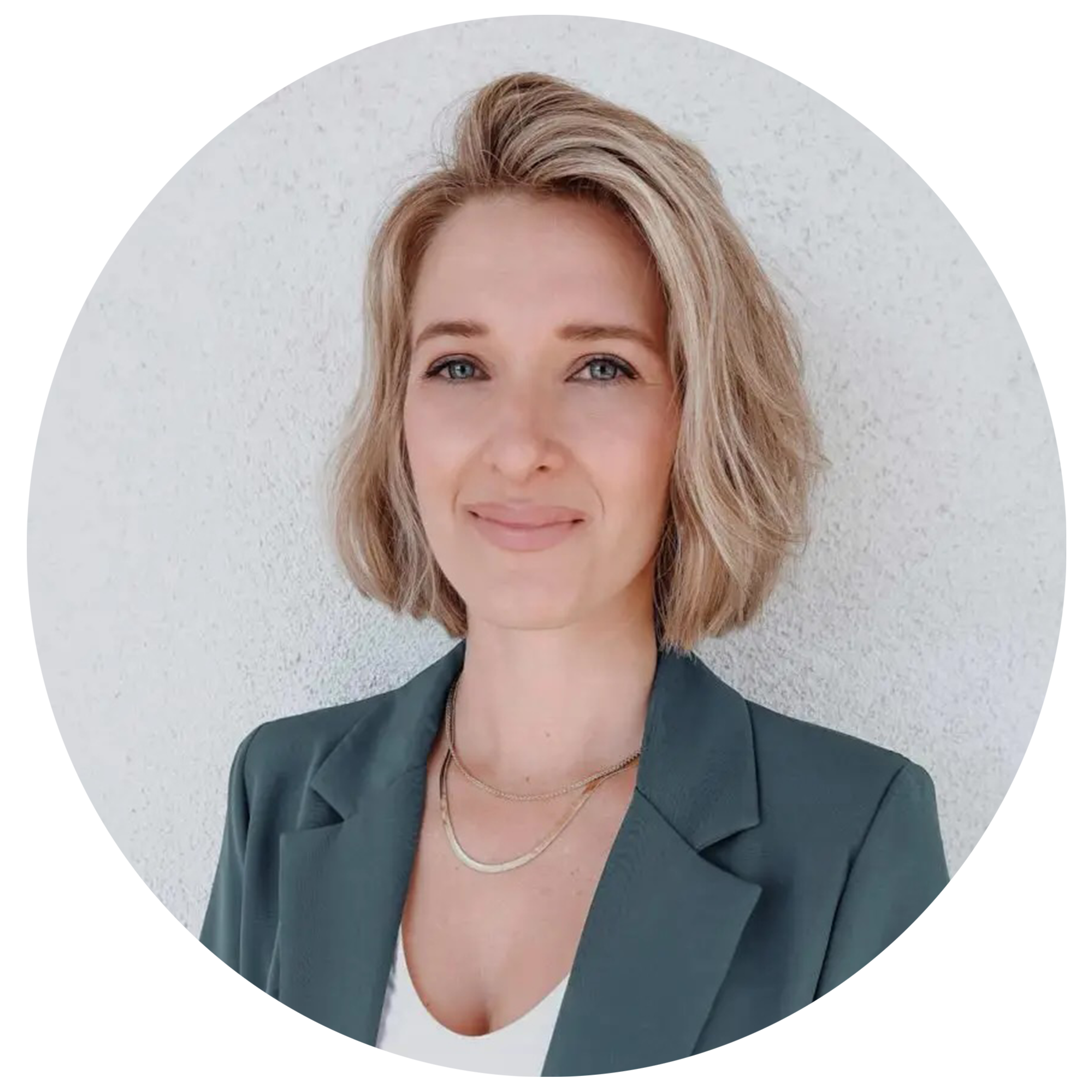
Our Guest: Maggie McCane, LCSW
Maggie McCane, LCSW, is a licensed clinical social worker and founder of Rehoboth Therapy & Wellness. She specializes in trauma and works extensively with high-achieving individuals and leaders to address the hidden impact of stress, anxiety, and burnout. Maggie has a background in child welfare, corrections, and nonprofit leadership, and was recognized as a 40 Under 40 honoree by the Tucson Hispanic Chamber of Commerce. She is passionate about helping individuals build sustainable mental health so they can lead stronger families and communities.
Rehoboth Therapy & Wellness: https://rehobothtucson.com
Maggie on LinkedIn: https://www.linkedin.com/in/maggie-mccane-lcsw-678452286
-
Nothing Changes When Nothing Changes - With Maggie McCane- Part 1
Dylan | DM.supply
Hey everyone, I'm Dylan Mitchell, and this is the Rincon Horizons Podcast. This is the show where we talk about leadership, the decisions, challenges, and lessons that shape great leaders over time. Our goal is simple. We want to help you lead better so your organization can climb higher. As always, I'm joined by my co-host and our main contributor, Todd Tuthill managing partner of Rincon Aerospace. Todd, so great to be back with you. And for those who might be joining us for the first time, because we do hope that we have new listeners all the time, would you mind introducing yourself?
Todd Tuthill
Dylan, thank you. I'm Todd Tuthill I'm the managing partner for Rincon Aerospace. We do executive level consulting for aerospace and defense companies. We help good aerospace companies become great. We help great companies that aren't in aerospace join this this really interesting AD industry. and Dylan, today are you feeling healthy? You feeling well? You feeling stressed? And we
Dylan | DM.supply
I yeah, I think so. A little bit.
Todd Tuthill
we have such a great topic to talk about today.
Todd Tuthill
It's an aspect of leadership and entrepreneurship that doesn't get so much airtime on podcasts and seminars. It's a leader's mental and physical health and wellness. And I am looking so forward to this conversation, looking so forward to our guest. She's a new friend of mine. I don't know as well as some of our other guests, but I'm really looking forward to it. So let's get moving.
Dylan | DM.supply
That's right. Today we are talking about something that, like you said, really affects every leader, I think, but doesn't get nearly enough attention. that's mental health, physical wellness, and really just the cost of caring responsibility. Joining us is Maggie McCane a licensed clinical social worker and the founder of Rehoboth Therapy and Wellness.
Dylan | DM.supply
Maggie specializes in trauma and works extensively with high-achieving professionals and leaders, helping them navigate stress, anxiety, burnout, and the pressures that often come along with success. Before starting her practice, Maggie worked in child welfare, corrections, and nonprofit leadership. She was recognized as a 40 under-40 honoree by the Tucson Hispanic Chamber of Commerce.
Dylan | DM.supply
Now, I do want to say before we get too far into the show, we do want to mention that the content shared in this episode is for informational and educational purposes only. It is not therapy and should not be considered a substitute for professional mental health care diagnosis or treatment. Now, with that said, Maggie, welcome to the show. We are so glad you're here. Let's just start at the beginning. Tell us a little bit about your story, what led you into social work and ultimately to founding Rehoboth.
Maggie McCane, LCSW
Yeah, great. Well, first of all, thank you so much for having me. This is such an honor. and I really appreciate the two of you making time and space to talk about mental health, especially as it impacts our community's leaders. I totally agree with what you said, Dylan, I think it's fair to say that what we're going to talk about today impacts or touches all leaders to some degree. So I just think it's such an important conversation. So thanks for having me.
Dylan | DM.supply
Absolutely.
Maggie McCane, LCSW
Where it all began, we have to go back a little bit in history. I graduated from the U of A with my bachelor's, and I honestly had no idea what I was gonna do. So I moved to Gracias Lumpira Honduras, which is one of the most dangerous countries. It was at the time when I moved there, and I went there to teach at a bilingual school.
But I quickly realized that teaching is not for me. All respect to teachers, my husband's in education. but that was just not for me. So I got involved with a nonprofit down there that was doing domestic violence advocacy work. And one night I was walking a woman home and we encountered her abuser. It was just the two of us. It was a very scary situation. Everything turned out okay. But it was in that moment that I looked at that man and I thought, who is helping you? A lot of time and resources were getting poured into these women, and as well they should be. I'm not negating that need at all, but no one was helping these men who were also part of this crime, also part, you know, instigating this level of violence. So that really stirred something to me. That was a huge moment in my life where I was like, okay, I need to do something about this. So I went back, got my master's, graduated, worked for the Department of Child Safety, began work in community mental health as a clinical therapist during that time.
When I worked at the Pima County Jail for a period of time. While of course there are women in the Pima County jail, it is predominantly men. So again a lot of exposure to men's mental health, men's history of trauma that was going un cared for, lots of unhealthy learned coping skills that led them to where they were today. So all that to say, these are kind of like the sprinkles of what got me to where I am. I'm working in community mental health and it really just felt like more and more insurances and the companies were putting all this red tape on us and over us where I just didn't feel like we were doing high quality mental health care. It was really just checking a ton of boxes for the company that I was working for and insurance companies.
I'm person of faith, and I had this moment with the Lord where He really prompted me to be like, you can do this better. Starting a private practice, becoming an entrepreneur was never part of the plan. That was never something I saw for myself. But I believed that. I believed that people could have access to better mental health care. And so we started, I started Rehoboth therapy and wellness. Rehoboth is a word that is difficult to pronounce and spell, but it was a
It's a biblical word and in that kind of moment of prompting, it's from the book of Genesis where the Lord brings Isaac to a place and he calls and he names the well Rehoboth which means an open space to prosper. And after feeling so much constriction in the mental health community that just resonated with me so well that's exactly what I want to create, is this just open space where people can get well, like truly get well. We have high quality therapists and people get better.
And they feel better and their lives are better, their families, the I believe the communities, their businesses are better because of the work that we do at Rehoboth. So that's where we are.
Todd Tuthill
Wow, incredible story. So many things we could unpack. I'd love to go back to talk about Honduras and bilingual and all those things, but but I'm gonna move on because we we just don't have that much time in the podcast. And the one interesting thing that that occurred to me as I looked through your website and looked at your practice.
You talked about wanted to focus on men and I believe now your practice, you specifically you focus on high achieving men executives, men in leadership, with all the opportunities out there and even in the space for men, why focus on high achieving men and executives? what brought that on?
Maggie McCane, LCSW
Mm-hmm. Yeah, so kind of given everything I shared, the main focus in our marketing with Rehoboth is to men. I think the mental health community does a really good job targeting women and children, but men just get left out of the conversation. So we wanted to we see women and children, but we really do have a high focus and priority in men's mental health and creating a space where they feel comfortable and safe working on their mental health. And then honestly, Todd, the high functioning leaders, the executives, the directors that wasn't necessarily planned.
I do free consultations where I get to meet with a client over the phone, hear about their needs, and then discuss who on my team might be the best fit. And I just started having more and more men in leadership say, Well, I want to work with you, Maggie. you're the owner of the company, you're an entrepreneur. I want to work with someone who understands what I'm going through. And just how true is that, right? We're all entrepreneurs here. I like connecting with other entrepreneurs because they really do understand what it is I'm going through. They just have that level of drive and motivation and big thinking that I'm attracted to. And so it just made sense to me once people started re requesting that specifically. Then I just opened that up I think I actually have a unique skill here and a unique ability to meet the mental health needs of high functioning executives or men in leadership.
Dylan | DM.supply
Like you've said, you do work with a lot of leaders and executives. As you've worked with them over the years, what are some of the patterns you see occurring over and over again? Is there any is there any common occurrence, any kind of common pattern?
Maggie McCane, LCSW
Okay, that's why I'm so grateful for this podcast today because I actually feel like there are so many commonalities and themes. And I'm not trying to say that, people don't have their own individuality and unique situations. Of course they do, but the themes are so prevalent, Dylan.
But I think this is important because I'm having these individual private conversations in the therapy room. And then I'm having such a similar conversation with the next client that I see and then the next one. And so it's like, let's just be having this conversation more broadly and more openly so that men in leadership, that's who we're talking to today, really resonate with this and say, Hey, that's me. So you're saying that I can feel better. I there's someone out there that can work with me, that understands me. I just want to highlight that I think this is really really important. Okay, commonalities, where to start?
I think the first one that always stands out to me, that surprises me, is that again, these are highly intelligent, highly motivated men, men who work really hard, who have built a whole beautiful life and great success for themselves, do a lot of hard things every day, and yet they struggle significantly with emotional vulnerability. So they have their stressors, their worries, their feelings of overwhelm, and they have no one that they can go and speak with about it.
They're fearful about going to their wife in most cases, but maybe partner, because they don't want to worry her, especially if they've worked so hard to build a beautiful career, going to her and saying, hey, I'm really worried about the business or things aren't going well. They just don't want to put that burden on their wife.
Dylan | DM.supply
Sure.
Maggie McCane, LCSW
You know, again, they're protectors. so they don't want to go to her. And then they can't go to their team because they're the one at the top. Everyone, again, is looking to them, relying on them. They have to be that strong person.
In the company. And then they work so hard that most of the time they don't have a huge social community, It's just really hard to have a robust social community when you're an entrepreneur and a hard worker. so they come and they just want someone to talk to. They just want someone to share all their emotional, kind of like I feel like even the word emotional for men. I'm trying, I want to be really cognizant to not turn men off of like, I'm not emotional, but just those
Todd Tuthill
Yeah, I was cringing a little bit when you said emotional, but I I'm trying not to
Maggie McCane, LCSW
Okay, I caught it. I felt.
Todd Tuthill
hide it. That's right. Cringing a little bit. And and I wonder how long does it take when a leader comes to you, this highly successful person, are they vulnerable immediately? Is it a connection they make or does it take a while to to kind of unpack that?
Maggie McCane, LCSW
Yeah, I think you're spot on, Todd. It's not an easy thing to just come to your first therapy session and start unloading all of your burdens and worries. I think that that piece of me also being an entrepreneur is a huge rapport builder. So I do think again, that's a reason that we get there a little bit faster. It doesn't take weeks and weeks, but there is that moment of do you really understand? And again, I think this is a an area that makes me uniquely skilled in this, is that a lot of other therapists and men tell me this will just tell them to work less, These are men who are working 10, 12 hour days. They're so stressed out, they have all these, all this weight on them. And therapists have told them, well, just work less and things will be better. And we know that's just simply not an option for them. So they need someone who really understands their unique circumstance. My solution isn't to work less because that's not a viable solution. And so I think once we start start to have that common framework and understanding, then they're like, okay, geez Louise, this is what's going on, This is what I'm struggling with. This has been really hard. I'm really scared. I'm nervous. Those sorts of things.
Dylan | DM.supply
To that point, you know, about people taking a while to open up. I just from my personal experience with therapy, my therapist I have now, it took me probably nine months of sessions for and this is no knock on her. I love my therapist, but it took me like nine months to actually just be honest with her about why I was having a call with her every other week. and that's entirely on me looking for commonalities and trends, is there and probably not? I'm probably searching here, but is there kind of a run of the mill, how long does it typically take for you to see someone want to be vulnerable? Am I the one who took way too long? Or is that an average or you know, does that make sense?
Maggie McCane, LCSW
It totally makes sense. Yeah. I'm trying to kind of evaluate the people that I work with and how long it's taken them. Nine months seems like a pretty significant amount of time. And again, no knock on you at all, Dylan. I think a lot of people can relate to that. a lot of people go to therapy and stay pretty guarded. And so I think I just have a lot of honest conversations of we'll go at your pace, but you want to move forward, I work with highly motivated people that don't have a ton of time to sit there. so I just try to like break those walls and those barriers as quickly as we can.
Maggie McCane, LCSW
The other thing that I was thinking when you were talking about that is again, you're an entrepreneur, so you're a perfect example of we have to have a little bit of a wall or a face that we give to the world of I'm okay, I got this, I'm hopeful, I'm moving forward. Picture like a whole ice wall that now I'm trying to melt all the way through and get you down to, okay, but what's really going on? of course, you're good, you got it, I believe you, you're strong, you're fine, but but how are you really feeling? Like, what's really that?
Maggie McCane, LCSW
internal dialogue. So some people are just quicker to get there and some people take a little bit of time.
Todd Tuthill
Beyond emotional vulnerability. that's obviously a great thing. I think it surprises me, but I guess it doesn't surprise me to hear you say that, number one. Are there other things that you see commonly in your practice, with men?
Maggie McCane, LCSW
Yes. Yeah. Another one that I talk a lot about, and so again, if you think about the emotional vulnerability I approach clients from either a cognitive framework or a somatic or a body framework. And of course we can do both, but people typically have one that they like to lean a little bit more to. When I start talking about their body and like somatically, how are they doing? It's so interesting that high achievers, and this is so true for women too. I have a lot of my girlfriends resonate with this, they are just on overdrive all the time. They are accustomed to cortisol and adrenaline pumping through their body at high levels and without stop. And you know this is the true for you listening or even Todd and Dylan, you here, if rest feels uncomfortable. if it's Saturday and it's like, okay, time to just sit and chill and do nothing. And that's like, what?
That means that your nervous system is in overdrive. Small amounts of cortisol and adrenaline are really healthy for us. They help us perform. Maybe it's a job interview or a performance or a speech or something like that. You want that cortisol and adrenaline to pump really strongly and help you focus and be really on. And then it goes down and you get back to baseline once the event begins or once it's over.
High achievers have this high level of cortisol and adrenaline pumping through their bodies at all times. And so there's no point in even talking about feeling stress, they just stop using that word in their vocabulary because that's just their constant state of being. And I think we can a lot a lot of us can relate to that idea. And something I find really interesting about that is that a lot of these high performers do a really strenuous physical activity for, and they say, like, this is for my mental health work out okay how do you work out i do crossfit crossfit is one of the most intense physical activities you could possibly do and what that is doing is it's continuing that flow of cortisol and adrenaline so your body actually while working out is very healthy crossfit is just maintaining that high level of stress hormones in your body. And so what we find then is that there are somatic symptoms of stress that a lot of high achievers can relate to: chronic migraines, insomnia, IBS, jaw clenching, you know, things of that nature, unexplainable pain, autoimmune diseases. I just wanted to give a couple more. Was there a question?
Todd Tuthill
I think you described half the things I have in in my life, but I don't know if I want to go there and diagnose me. This isn't a therapy session for Todd. But I did want to go back to something because you said something interesting that I don't think I've ever heard anyone in your field, I mean the books I've read about health and wellness always talk about exercise is great, exercise is great. And and I think you're saying that's not always true. Not all kinds of exercises are necessarily the right kinds of exercise. So
So if CrossFit is not the best kind of exercise for someone who has cortisol and adrenaline in their system all the time, what kind of exercise is the right kind of exercise for a person like that?
Maggie McCane, LCSW
Yes.
So these sorts of clients, I need them to start slowing down and regulating their nervous system and allowing their brain and body to feel safe with going slow. So, and people, I feel like you're gonna laugh, Todd, and my clients do too when I say, I need you just go on a walk, but like a slow walk. We're not like it's not a brisk walk. This is a slow regulating walk. I want you on a bike ride slowly. This is not to get your heart rate up. The goal is to get your heart rate down and to help your nervous system regulate.
Dylan | DM.supply
So my mile pace needs to look substantially longer than I'm trying it like I'm I'm going for a seven minute mile. I should be going for like a fourteen minute mile, is what you're saying.
Maggie McCane, LCSW
If you can relate to what I'm saying, yeah. If you feel
Dylan | DM.supply
Yes.
Maggie McCane, LCSW
like you have a what we would call like a toxic level of stress that you have a sh a difficult time regulating from, then yeah, we would want to intentionally slow down.
Todd Tuthill
Maggie, I hear what you're saying and I'm trying to imagine that that I'm just a a listener of this podcast, not not somebody hosting it. And what things would be going through in my mind. And and one of them might be, well, okay, I'm an entrepreneur, I'm starting my business, I don't wanna be lazy. And and where did where does the line cr you cross the line from I wanna slow down, I wanna take time for myself. and I'm just being lazy and I'm feeling sorry for myself because I you know, where where where do you where do you draw that line and how do you help somebody who's high achieving stay away from that line? Because I think they would not want anything to do with that.
Maggie McCane, LCSW
I'm so excited about this question, Todd. I'm so glad you asked this because this is so common, This is the exact conversation I have. The men in front of me will start to be like, this isn't for me. Actually, I'm not gonna slow down. I don't want to regulate my nervous system, I don't want to lose that feeling of on and that I can do everything. And so it really is helping them understand that you can have both. But right now, if your nervous system is in that toxic level of stress where rest feels uncomfortable.
You are no longer in control. And so I want you to get at a place where you're in control. You can control when it's time to turn it on and work, work, work for 10 hours a day. And then you get to tell your brain and body it's now safe to turn it off. And now I want to be present with my family, with my kids, with my wife. I want to be present with my health and with my body. And so helping people understand that both are possible, but we have to find that balance, I'm not asking you.
To give up one. I'm just asking us to be in more in control of the other. And typically that does really resonate with clients because they can see the lack of presence and attunement with their families. That typically is something that resonates really well. After work, I try to sit down and have family time because of course I want to be a good dad and I want to be a good husband, and I'm still thinking about work or thinking about my project the next day. And it's hard to let my nervous system totally relax, relax and have fun with my kids and laugh and be silly. We can't do both, You can't have your cortisol pumping through your brain and laugh and have fun at the same time.
Dylan | DM.supply
One thing that I was thinking about, Maggie, I was reading through some of the notes that we had for this show and I saw one of the notes that you put in was that the average man waits eleven years after their first symptom before seeking mental health support. And that kind of blew my mind and I was like, that can't be right. but then I thought about myself and I was like, actually that's that's about right. and I just wonder geographically, I guess this is a broad question. I grew up in the South. and growing up in the South, there was
Dylan | DM.supply
I would argue maybe more of a stigma around mental health than there is out west.
Maggie McCane, LCSW
Mm.
Dylan | DM.supply
With the people that you see and that you work with, are they mostly local to the Tucson or Southern Arizona area? Or do you have people from a little bit more of a broad geographical range to kind of weigh in on that part of the discussion? Do you think there is more of a stigma of mental health and wellness in different parts of the country?
Maggie McCane, LCSW
That's a great question, Dylan. I honestly don't know. Our license is state specific, so I can only work with people in the state of Arizona. So I wouldn't be able to compare
Dylan | DM.supply
Sure. I I just wondered if you had had clients who maybe had moved from another part of the country, if like whenever I lived in Tucson, I had, you
Maggie McCane, LCSW
Mm-hmm.
Dylan | DM.supply
know, grown up in the south, moved to Tucson. And so I kind of carried that stigma with me until I eventually ended up seeing a therapist over Zoom.
Maggie McCane, LCSW
I think just what we know about different cultures throughout the United States, I think that makes sense. And I think that it tracks when you think about the Midwest or the South, a little bit more of the conservative mindset versus out west a little bit more open to healing and trying different methods of personal self growth. I think I can resonate with that and I hear that, but yeah, I don't have comparative data, unfortunately.
Todd Tuthill
Maggie, thinking about people listening to the episode and they're saying, Okay, yeah, I can identify that with some of the things she's talking about, some of the autoimmune things, some of the the cortisol and stress. If people are listening to this and and they're saying to themselves, how do they know when they should do something about it? When does it get to the point of, well, that's just normal things everybody deals with to know I really should see somebody and Where where does it cross that line, do you think, that they need to go see somebody professionally? What would what advice would you give our listeners?
Maggie McCane, LCSW
Mm-hmm. Yeah, I thought of three questions that listeners might be able to ask themselves as a good indicator that maybe they need additional support. So the first one would be, do you have a space to be emotionally vulnerable? Do you have someone to share your burdens with, to be truly honest, who can clearly see you and you're fine, you're comfortable, you feel safe in being totally honest and open with what's going on in your life and your thoughts and your feelings.
Maggie McCane, LCSW
if you do have that, then that's excellent. That's really healthy. If you don't have that, then maybe that would be a reason to consider some professional support.
Todd Tuthill
Could you give me some examples that you know, because I'm I the only man I really know inside is me. what are some of the places that men typically have those places to be emotionally vulnerable?
Maggie McCane, LCSW
Mm-hmm. Yeah. I mean, some people can utilize their wife. Some people do feel really safe going to their wife and having deeper, harder conversations. They feel safe with her. And again, I want to be really clear that, a lot of men listening might be like, I love my wife. We have a great relationship. And so I'm not speaking to that. I'm speaking to can you be like fully transparent and honest and not worry about her or what she's gonna think or will she think of you differently? Because a lot of these men have very healthy and fine marriages, but they just want to be that protector and they don't want to be seen differently. And so then they keep some things to themselves.
And then so okay, so a wife would be, you know, kind of a common example. Maybe you have a really good friend, maybe you have a business partner that you do feel like, hey, I can totally unload with them. They really see me, they really know what's going on. Maybe it's a you know pastor at a church or something like that. So those are, I think, all really healthy examples.
Dylan | DM.supply
To that point, you mentioned pastor at a church. I think all three of us, it's fair to say on this podcast are people of faith.
Maggie McCane, LCSW
Yes.
Dylan | DM.supply
When it comes to that, how do you navigate that? Because I know that some people have a very closely associate a pastor at their local church or or their pastor at their church as someone who can step in and be a therapist character in their life, play the role of therapist in their life when in reality a pastor is typically not a licensed therapist. how how do you navigate that conversation? Is that a conversation you've had to navigate before? I'm I'm just curious.
Maggie McCane, LCSW
Yes, yeah. I have this conversation a lot actually because, I'm involved in the church community. And so a lot of people will say, I've sought discipleship or I've sought biblical counseling and support.
Maggie McCane, LCSW
Nothing wrong with any of those things. But if you continue to struggle with the same issues or concerns, it's not getting better, maybe it's even getting worse, then you probably then that's when I would encourage people to find a licensed professional who, just we just have more training, We just have more training, we know more about the brain, we have evidence-based modalities that we can utilize and teach people.
EMDR is something that I do a lot of a technique in therapy. And it just goes deeper into the brain to disrupt cognitive distortions or things that we've believed about ourselves probably from early childhood in a way that you just can't do from regular talk therapy, you can't do from regular community support. a lot of us just need that like additional level of deeper care.
Dylan | DM.supply
Great answer. Thank you for sharing.
Maggie McCane, LCSW
Yeah, of course.
Dylan | DM.supply
That's all the time we have for this episode, but this conversation isn't over. We're going to pause here though, and we'll pick it up in the next episode. Huge thank you to Maggie for joining us today. And Todd, as always, thank you so much.
If you want to learn more about Maggie and Rehoboth Therapy and Wellness, you can find that information at https://rehobothtucson.com That's R-E-H-O-B-O-T-H-Tucson.com. Every episode of Rincon Horizons, we unpack the decisions and disciplines that shape us as leaders, at work, at home, and everywhere in between. Our goal is simple: to help you lead better so your organization can climb higher.
If today's conversation challenged you or encouraged you, share it with someone who's thinking about making the leap into leadership.
You can find more about Rincon Aerospace or connect with Todd using the links in the show notes or at Rincon.Aero. That's R-I-N-C-O-N dot arrow. I'm Dylan Mitchell. You can learn more about my work at dm.supply. Thanks for listening, and we'll see you next time on the Rincon Horizons podcast.