

A Relentless Search for Learning Points with CDR Caleb ‘Brown Water’ Zeid - Part 1
SHOW NOTES:
The Rincon Horizons podcast is where we talk about what it means to reach the summit on your leadership journey. We want to help you lead better so your organization can climb higher. Todd and Dylan welcome US Naval Aviator and TOPGUN graduate CDR Caleb ‘Brown Water’ Zeid to the podcast.
The topics in this episode include:
Learning night operations on an aircraft carrier
How CDR Zeid got his call sign
Leadership lessons from a Naval Career
Leadership lessons from TOPGUN
Links mentioned in the podcast:
Rincon Aerospace: https://www.Rincon.Aero
DM.supply: https://www.dm.supply
Ideal Team Player hiring resources: https://www.tablegroup.com/idealteamplayer/
Books recommend in the podcast:
Insanely Simple: The Obsession that Drives Apple's Success by Ken Segall: https://a.co/d/2JSwQBG
The Ideal Team Player: How to Recognize and Cultivate The Three Essential Virtues by Patrick Lencioni: https://a.co/d/cOtE8lx
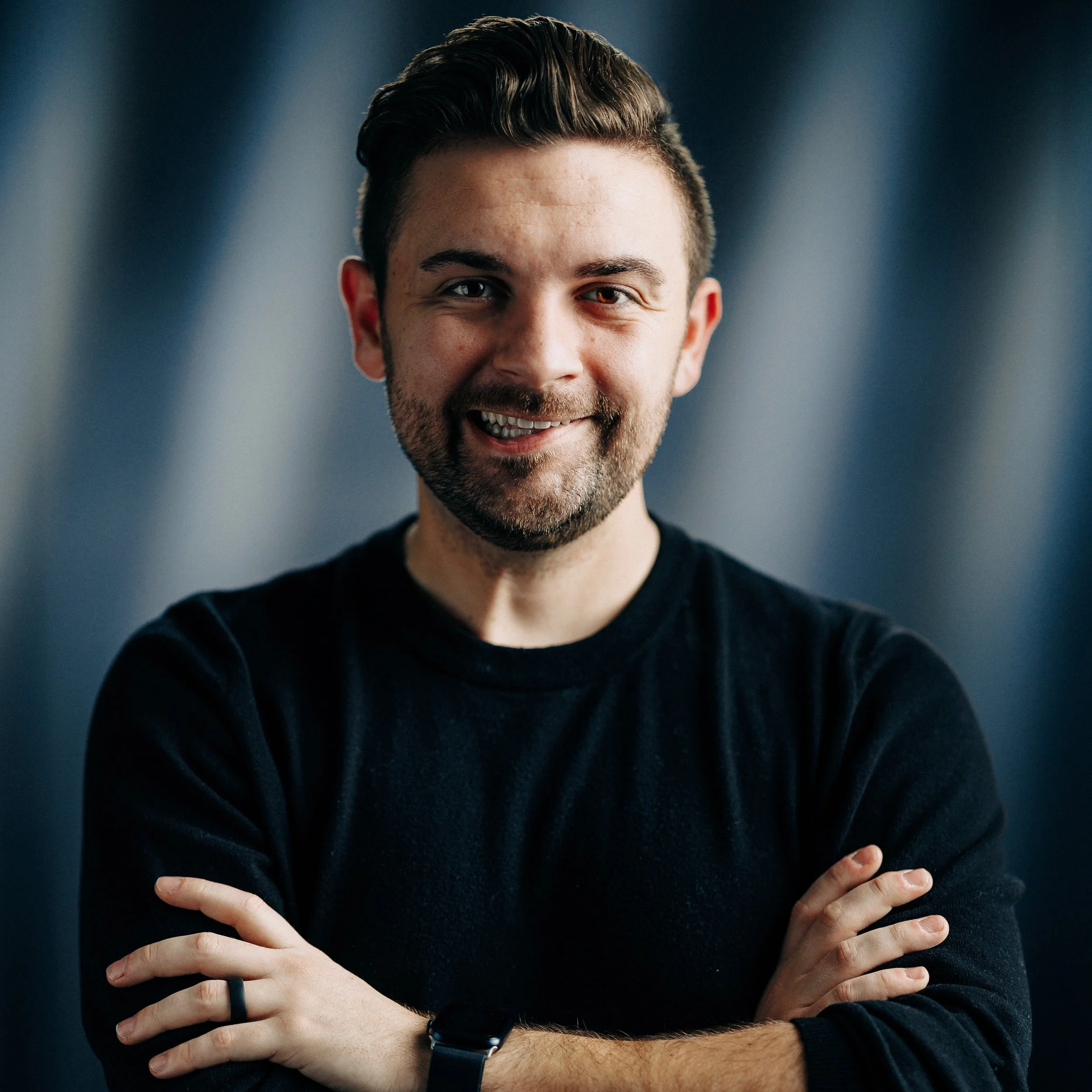
Moderator and co-host Dylan Mitchell
Dylan is the Brand Strategist, Creative Director, and Founder of DM.supply. He’s passionate about helping churches, nonprofits, and businesses of all kinds build brands that are clear, meaningful, and built to last.
Find Dylan on LinkedIn at: https://www.linkedin.com/in/dylnmtchll/

Primary contributor and co-host Todd Tuthill
Todd is the Managing Partner of Rincon Aerospace - A consulting company guiding aerospace companies to exceptional.
Todd is an aerospace executive and systems engineer with more than three decades of experience designing aircraft flight control systems
Find Todd on LinkedIn at: https://www.linkedin.com/in/toddtuthill/
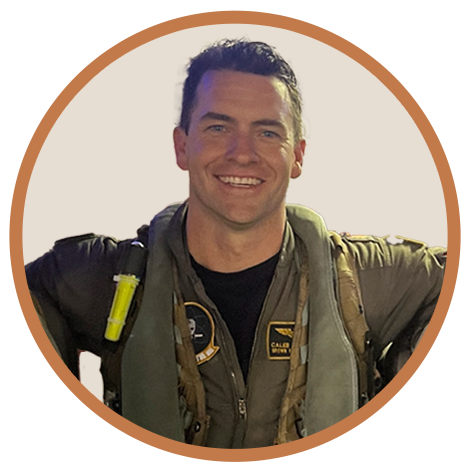
Our Guest: CDR Caleb ‘Brown Water’ Zeid
CDR Zeid is a US Naval Aviator and TOPGUN graduate. He was an instructor at US Navy Strike. He has done two sea tours. He is currently doing West Coast strike fighter officer placement and command management. He was recently selected to be the future operational commander of the VFA-151 Vigilantes at Naval Air Station Lemoore, California.
Find Brown Water on LinkedIn at: https://www.linkedin.com/in/caleb-zeid-994ba18b/
AI GENERATED TRANSCRIPT: Rincon Horizons S1E3 - A Relentless Search for Learning Points with CDR Caleb ‘Brown Water Zeid’ - Part 1
Dylan Mitchell
Hey everyone, I am Dylan Mitchell and this is the Rincon Horizons podcast where we talk about what it means to reach the summit on your leadership journey. We want to help you lead better so your organization can climb higher.
Today's a milestone for us. This is our second full episode and first time we have welcomed a guest on the show. From the very beginning, since we've been planning and talking about this podcast, Todd and I, we have planned to bring other leaders into these conversations and we're excited to start that today.
Todd Tuthill
Woohoo, second episode.
Dylan Mitchell
As always, am joined by my co-host Rincon Aerospace Managing Partner, Todd Tuthill Todd, before we jump in, give any new listeners a quick overview of your background.
Todd Tuthill
Thank you, Dylan. I'm excited to be here today. Todd Tuthill I'm executive and engineer. Spent most of my career developing flight control systems for aircraft and or leading the teams that do that. I've worked for Boeing and Raytheon and MOOG aircraft. I've worked with nearly every other major aerospace OEM in the Western world. But past three years, I was a vice president for aerospace and defense at Siemens. And now I have moved on to start my new company called Rincon Aerospace.
I've held several other roles in my several leadership roles in my career, chief engineer, director of engineering and vice president. before we get into the day's podcast, Dylan, I have to say something, because we have hopefully I don't if we have regular listeners and if you can have regular listeners by the second podcast, probably some of the people listening today listen to the first podcast. And they're going to be surprised by our first guest, I think, based on some of the things we said because there were a couple of things that we kind of went back to over and over again in last podcast. And it's kind of funny now that I think about it. One was we said, this is a leadership podcast. It's a leadership podcast. There'll be some aerospace stuff in it, but it's mostly about leadership. And then I was kind of laughing as I was listening back because we made several references to the TOPGUN movies. Well,
Dylan Mitchell
Yep, that's, are you, we never came back to you. Are you a purist or are you a new age? We never really came back.
Todd Tuthill
I think well because of the jet I think I'm definitely a TOPGUN Maverick fan. I like them both. I can probably quote lines for both movies but I'm a TOPGUN Maverick fan but when people hear our guests today some of them are going to think we were just dropping Easter eggs like it was a Taylor Swift concert. Okay but but but that's not what we were doing because we didn't have our next guest booked yet so we we really didn't know that so Dylan will do the formal formal introduction in just a second but let me say how honored
I am that we've got a real life US Navy TOPGUN pilot on the podcast with us today. And we're going to talk about some fighter jet stuff, but don't miss, as you listen, don't miss what we brought to Commander on the show today. It's not just because he graduated from TOPGUN. It's primarily because he's a naval officer and an incredible leader with things he can teach us all about leadership in all aspects of our lives. So we'll do the fighter jet stuff, but I'm going to contend it's still a leadership podcast.
Dylan Mitchell
I think I would agree with that. To your point, today's guest is a meaningful one for me personally. Commander Caleb 'Brown Water' Zide is a naval aviator with a remarkable record of service and a deep well of leadership experience. And on top of all that, pretty cool. He's my brother-in-law. So this is a fun moment for me as well. Caleb, thanks for joining us. To start, could you give our listeners just a brief, like 30,000 foot view of your career so far?
Caleb Zeid
Yeah, sure. And just kind of on the other side, I'm definitely honored to have this opportunity I'm fairly passionate about leadership. And I don't know if I'm an incredible leader, Todd. I appreciate that. That's kind. learned from a lot of mistakes I've served with some amazing leaders up to this point. So I've been able to learn from some of the really amazing people and incredible leaders and I'm fortunate enough to be talk to you guys today. Overall.
My career, went to, my undergraduate degree in San Diego, at the university of San Diego in history. And then I went to flight school in Pensacola, for all the indoctrination stuff. Did my first year in primary there, went to Meridian, Mississippi to fly the T 45, was selected to go F 18s from there, went to Lemoore to do the FRS at VFA 122.
And then I stayed in Lemoore, went to the vigilantes of VFA 151 as a junior officer. Did almost four years at the vigilantes, one and a quarter, one and a third of a deployment there, lots of training. And then I was selected for TOPGUN, attended TOPGUN in Fallon in January of 2019. I stayed up in Fallon on staff at a entity called Strike which teaches advanced large force integration to deploying airwings. And from there, went to a training officer slash department head job back at VFA my second sea tour. And then 34 months there and then came to Tennessee. And I now do West Coast strike fighter officer placement and command management help out the team and get people where they need to go. And then I was recently selected for operational command and I'll be heading back to Lemoore next year to start my training to become operational commander back at VFA 151 again. third time's the charm at the vigilantes for Brown Water.
Dylan Mitchell
Now that everyone has a sense of your background, I want to bring up something that obviously I know, but our listeners and I don't think Todd even in our pre production meetings. I don't think he knows. Would you share your call sign and the story behind it?
Caleb Zeid
My call sign is Brown Water. Caleb Brown Water Zeid. It sounds a lot funnier and more entertaining than it actually is. It's one of the call signs that gets a good reaction, but then there's no good story your mind would imagine. won't go into the details of what it makes people think about, but I'm sure the listeners can kind of imagine what that brings to mind in a variety of capacities, but it had to do with when I was patched to the Vigi's the first time it was Fairly close to the last workup cycle on the boat I patched two days or three days before The squadron went to the boat for a month-long detachment that was at the end of their workup cycle So the whole squadron is extremely competent. The whole air wing is extremely competent very well trained and then I showed up as a brand new guy. So I'm the opposite of competent. And we go out there and we get qualified, everybody gets re-qualified and the first night we're doing what's called a blue water certification, which is where the ship and the air wing get qualified to operate out of range of any diverts. you're, know, 600, 700, 800 miles off of the coast of any land. Well, that requires a lot of metrics to be met. Anybody that doesn't land on their first try, really bad. I decided my first night on the ship as a brand new miss the wire and bolt her three times in a row I was scared I was already mad, you know I had to do four night traps in one night because I couldn't catch the wires and The next day I was taken off the flight schedule CAG said no chance Can he fly again.
We had someone get sick. had to go flying the next day, even though I wasn't supposed to. I ended up being messed up my pattern. I was way too close. I got waved off twice in a row. So I had two more open deck times on the blue water cert. We were essentially one pass away from failing and having to restart the whole certification because of me. And then it was that day forward, CAG said, that's brown water. I think it was actually my CAG paddles who was waving and he said it and that was it. Second third day in the squadron I had a call sign.
Todd Tuthill
You talked a bit about flying at night and missing the first few times. And I think to mere mortals like Dylan and I, trying to land on a boat in the middle of a dark ocean sounds terrifying. So can you tell us a bit more about night operations on a carrier? The cats and the traps and how you learned and I assume you don't miss the wire like that like you used to anymore right that you've gotten better right?
Caleb Zeid
No, no, I have indeed showed an improving trend. I've always been what, you I always competed for the award at the end of the line period that we called the average Joe ball flyer, which is the guy that's kind of right in the middle of the the pack. But I always I always competed from below the middle, like trying to get up there as a young as a J.O. But.
Todd Tuthill
That's good.
Caleb Zeid
Then as a department head, definitely improved with my capabilities and over time as a JO even got better each opportunity I got to practice. So I have a lot of practice doing it, which has then made me better. And now, certainly not as bad as it used to be. Night bolters still happen every once in a while, but, it's still just as terrible because you think you're stopping and then you keep going and you're angry. like, you know that you have another 10 minutes or eight minutes flying around at night and it's dark and you just want to land and go eat something. But no, it's a night operations on the carrier are, it's hard to explain. They're dark. The, I think the scariest moment for me is walking out onto the flight deck at night. Cause you get, spend, you know, an hour or two prepping and briefing and getting ready. And then you spend a few minutes sitting around waiting.
And then once it's time to actually walk out, you get dressed and you put on all your flight gear. But you're still on the ship the whole time. The red lights are on, it's kind of dark and it's a little quieter at night. But you're still safe inside the skin But as soon as you open that hatchway and go out into the outdoors area, it's just pitch black. There's a little bit of lights on the flight deck, but in general it's just dark.
And then you kind of adjust and you walk out and you walk up the catwalks, walk up some stairways and get onto the flight deck and people are moving and there's things happening and you're trying not to get in the way. But it's always that walking out onto the flight deck, never feels great. But as you get more comfortable, once you get in the airplane, you're like, okay, I think I can do this now. And then you get in the airplane, you get all settled in, you start up, you do all your preparation and then you go up to the cat shot.
A lot of experienced guys will tell you when they're young, when you're young, the night landing is the scariest part of night operations. Cause you don't know what's happening on a cat shot. You're just happy to be there. You come back around making the approach and getting to the appropriate window and landing is hard and scary. But then as you know, and in bad weather, that's certainly true. Like a night bad weather landing is not good, not fun. There's nothing.
There's very little enjoyable until you stop. That's the enjoyable moment. But the cat shock can oftentimes be even worse, especially if there's any kind of cloud layer, you just basically get launched off the front into black because the ocean is black and the stars and the moon are blocked. It's black. Everything is black. don't know. You just have to look at your instruments and hope that it's being true. And lot of vertigo and weird things happen on the cat shot. people kind of more experienced people end up disliking cat shots a little bit more than the than the night landings, I guess
Todd Tuthill
Thank you to you and to all the other brave in the Navy willing to, they're still alive to do that for us. Thank you.
Caleb Zeid
It's my I tell everybody it's my pleasure I get to do something that I've dreamed about and It's it's something that I can't I've been fortunate enough to do for almost 15 years. So it's been great
Dylan Mitchell
Tell us about squadron leadership roles, you've held several leadership roles at the squadron level. Could you walk us through some of those responsibilities and share what each one taught you? Because I think a lot of people have this preconceived notion that, you're a pilot, you fly jet, you go home. And there's a little bit more to it than that.
Caleb Zeid
Indeed. We, know, the Navy jokes and that Naval aviators are officers first and then pilots. That's the general Naval aviation mindset. but you start your leadership essentially as soon as you arrive at a squadron. So the only time you're not leading anyone other than yourself is when you're in the training commands, but as soon as you get to a squadron, you're given some kind of job and you have to lead, whether it's side to side leadership, IE peer leadership, or it's ⁓ going in, stepping into a division officer role. So a junior officer will typically run one of the divisions in a squadron and they'll be in charge of somewhere between 30 and 50 sailors and a variety of maintenance departments or maintenance.
Personnel and that's kind of where you do as a J.O. It's your main leadership learning crucible and you you learn a lot from your chiefs and things like that And your department heads kind of mentor you as the as the heads of your department Then you go into operations if you're in operations as a J.O. You don't do it It's a lot of peer leadership kind of working with each other And as you get more senior you kind of lead the rest of the junior officers as a department head running each department. So could be an admin department of 10 sailors that manage all the admin duties of the squadron. Or it could be a maintenance department, which is kind of the premier leadership moment of the department head role where you can have 215 to 240 sailors and all the maintenance departments. And so you're responsible for the upkeep, the programs of the jets and all of the different inspections and things like that managing 30 or 40 programs depending on what the current NAMP is. But you kind of have to be an expert in all, or at least know everything so you can help direct the maintenance department.
Todd Tuthill
So Commander, I wonder, when you were thinking about going in the Navy, you wanted to fly jets. When you were just thinking about flying jets, did you understand the leadership responsibilities and how much that would be there when you got to the Navy?
Caleb Zeid
No, I did not. It was not something that you see, You don't see in TOPGUN, whether Maverick or the original, you don't pilot finish the mission, shoot down a couple of MiGs, land and then have to go sit down at his desk and do two hours of paperwork to make sure that the programs are in line and do fit reps, which is what he's really doing after he does all that
Ultimately, it ends up being rewarding in a different way and you can take just as much fulfillment from some of those opportunities to lead. And the people you serve with, really make that you realize how much of a difference the leaders you serve and you work for can make in your own career. And I was fortunate to be able to follow in the footsteps of many great leaders that it inspired me to stay in the service and pursue the different things I did.
Dylan Mitchell
Before we move on, heard you say, you can basically you can learn to love it. There's things that you can learn to love. Even if it's the things that people don't necessarily think are the sexy part of being a pilot. While you're learning that, would you give any practical advice just from a leadership perspective how did you learn to love the things that weren't necessarily the thing that you thought you were signing up to do?
Caleb Zeid
I found mindset becomes extremely important because anybody can choose that, like, I don't want to do this. This is just a waste of my time. All I want to do is be studying tactics and preparing for my flight. if you can, start your day with, OK, I'm going to spend an hour in the shop doing these things. all you have to do is go talk to any sailor in a maintenance department for 10 minutes and you'll realize exactly why it's worth it and why that's almost as more rewarding because you get to talk to these young men and women who have chosen to leave their home somewhere in America or overseas. The amount of sailors that enlisted in the Navy to come work for a squadron or come do something just to get their citizenship is phenomenal. And so you get the opportunity to work with these young men and women who are just excited, motivated and they kind of like restores your faith in humanity a little bit when you get to talk to the sailors. Even when they're having a hard time, you still get that opportunity. So really the people that you get to lead is what creates that. You realize that, wow, I get to do something to help these people out if I have the smallest as their leader.
Dylan Mitchell
That's super practical knowledge that I think a lot of people can apply. I do know that you're a TOPGUN graduate, ⁓ which is something very few people will ever experience. And I know the original movie was a huge part of your childhood. How old were you when you first saw it? What kind of impact did it have on you as you started thinking about aviation in general and maybe the Navy. ⁓
Caleb Zeid
Yeah it had a lot of influence in driving me to, my chosen career path or my dreamed career path. don't know when I first saw it, probably way too young for my parenting style and what I would let my kids watch. I guess my kids have watched TOPGUN, so I can't say that, but, you know, I still fast forward through the weird shadow scene still to this day. But, no, I don't know. I watched it a lot growing up to the point where I think I broke a VHS tape at one point. And it was, it's really the only thing I can remember having wanted to do, which somewhat common amongst other people in the Navy, not that TOPGUN was that big of an influence, but just the desire to pursue aviation or being a pilot is common amongst us. I don't know what the percentage is, but quite a few people have always wanted to do it.
Todd Tuthill
Brown Water, when you think about your time at TOPGUN and the things you learned, would you tell us about not just necessarily the fighter jet stuff, but the leadership stuff? Talk about how it made you a better leader and a better naval officer.
Caleb Zeid
TOPGUN is unique in that the influence of TOPGUN is designed to percolate all the way down to the most junior person in a squadron, to the most junior pilot in a squadron, even down into the training pipeline to a certain extent. Because you learn in your training, and certainly once you get to TOPGUN, very quickly I'm not as good as I thought I was. And there are people that are much better than me, for example, the TOPGUN instructors.
Yet you learn that it's a constant and relentless search for learning points, searching to find the mistakes that you made in every flight, in every brief, in every simulator. You learn to really isolate and find those mistakes, turn them into a way to learn so that you prevent yourself from making those mistakes again. That translates really well into leadership because leaders are making decisions by nature on a daily hourly basis, whether it's in a meeting, whether it's in a one-on-one with a direct report or it's any decision. You should always be debriefing your decision to see how you did, and if you could have done it better.
Once you debrief it, if you figured out ways you could have done it better, then it's now your responsibility to teach it to the next person that's going to do the job or to someone who may be in a similar decision-making situation. That's the overarching end goal of TOPGUN to create tactical fighter pilots who are at the edge of tactical capabilities, but can also recognize and teach to mistakes that are made during the execution of those tactics.
That's the goal. And that's why TOPGUN graduates are called Strike Fighter Tactics Instructors, because that's your primary mission to go teach and maintain that standard of instruction.
Todd Tuthill
Interesting, I think it's something that again, I don't think I got out of the whole TOPGUN thing. I guess there's more to TOPGUN than we saw in the movies, huh?
Caleb Zeid
Indeed, there is. There is.
Dylan Mitchell
We're getting into the heart of this conversation, but we're about out of time. We're going to pause here and pick things up in the next episode. Thank you so much, Caleb, for joining us today. And thank you, Todd. Thank you to everyone listening. Every episode, we unpack the moments and decisions that shape us as leaders at work, at home, and everywhere in between. Our goal is simple. We want to help you lead better so your organization can climb higher. If today's conversation resonated with you, please consider sharing it with a friend or a colleague who is on their own leadership journey because we all are on one.
You can learn more about Rincon Aerospace or connect with Todd using the links in the show notes or at Rincon.Aero. That's Rincon R-I-N-C-O-N.Aero. My name's Dylan Mitchell. You can find more about my work over at dm.supply. Thanks so much for listening and we'll see you next time on the Rincon Horizons podcast.