

A Relentless Search for Learning Points with CDR Caleb ‘Brown Water’ Zeid - Part 2
SHOW NOTES:
The Rincon Horizons podcast is where we talk about what it means to reach the summit on your leadership journey. We want to help you lead better so your organization can climb higher. Todd and Dylan welcome US Naval Aviator and TOPGUN graduate CDR Caleb ‘Brown Water’ Zeid to the podcast.
The topics in this episode include:
Learning night operations on an aircraft carrier
How CDR Zeid got his call sign
Leadership lessons from a Naval Career
Leadership lessons from TOPGUN
Links mentioned in the podcast:
Rincon Aerospace: https://www.Rincon.Aero
DM.supply: https://www.dm.supply
Ideal Team Player hiring resources: https://www.tablegroup.com/idealteamplayer/
Books recommend in the podcast:
Insanely Simple: The Obsession that Drives Apple's Success by Ken Segall: https://a.co/d/2JSwQBG
The Ideal Team Player: How to Recognize and Cultivate The Three Essential Virtues by Patrick Lencioni: https://a.co/d/cOtE8lx

Moderator and co-host Dylan Mitchell
Dylan is the Brand Strategist, Creative Director, and Founder of DM.supply. He’s passionate about helping churches, nonprofits, and businesses of all kinds build brands that are clear, meaningful, and built to last.
Find Dylan on LinkedIn at: https://www.linkedin.com/in/dylnmtchll/

Primary contributor and co-host Todd Tuthill
Todd is the Managing Partner of Rincon Aerospace - A consulting company guiding aerospace companies to exceptional.
Todd is an aerospace executive and systems engineer with more than three decades of experience designing aircraft flight control systems
Find Todd on LinkedIn at: https://www.linkedin.com/in/toddtuthill/
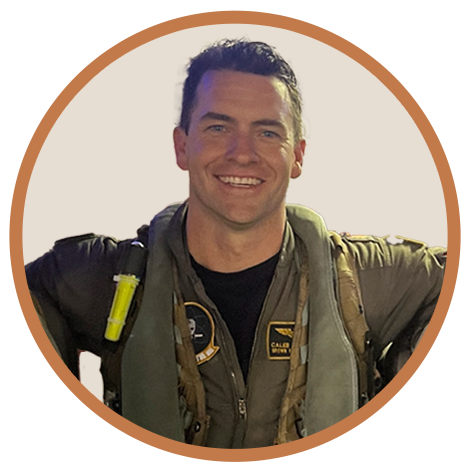
Our Guest: CDR Caleb ‘Brown Water’ Zeid
CDR Zeid is a US Naval Aviator and TOPGUN graduate. He was an instructor at US Navy Strike. He has done two sea tours. He is currently doing West Coast strike fighter officer placement and command management. He was recently selected to be the future operational commander of the VFA-151 Vigilantes at Naval Air Station Lemoore, California.
Find Brown Water on LinkedIn at: https://www.linkedin.com/in/caleb-zeid-994ba18b/
AI GENERATED TRANSCRIPT: Rincon Horizons S1E4 - A Relentless Search for Learning Points with CDR Caleb ‘Brown Water Zeid’ - Part 2
Dylan Mitchell
Hey everyone, I am Dylan Mitchell and this is the Rincon Horizons podcast where we talk about what it means to reach the summit on your leadership journey. We want to help you lead better so your organization can climb higher.
Welcome back to the Rincon Horizon's podcast. We pick up where we left off in the last episode with Rincon Aerospace Managing Partner Todd Tuthill and CDR Caleb 'Brown Water' Zeid.
Dylan Mitchell
Looking at your career, you've led in environments where I would argue, honestly, every time you get in the jet, the stakes are high and the margin for error is very small. And when you think about leadership in those moments, are there any core principles that guide you?
Caleb Zeid
Yeah, I've been thinking about that now that I've been kind of out of a squadron and not flying for the first time for a year now. I've had some time to kind of think back through that and start preparing for my opportunity to go back and be an executive officer in a command. And I've filtered it down into three core principles that I probably didn't invent and I probably found them this is not my own original this is how I can think about it. But what I've seen is one of the most important things I need to do is drive preparation. I think we are exhaustive briefers in naval aviation. We brief for 45 to 50 minutes of tactical execution and QA and spend all this time with our flight members before we even get ready to go flying. And we spend hours prepping those briefs, writing out Word documents, changing, practicing examples, drawing on whiteboards to fine tuning those briefs.
I've really found that the more you're prepared as a leader for whatever you're going to go do, the more confident you will be when you have to go out and do whatever it is, whether that's a decision in a meeting, you're going to have a project meeting and you need to make a decision on the way forward. If you don't prepare for that and you're not well researched, don't understand all of the implications. You're not going to be confident when you're asked to make a decision by either your boss or by the people that are asking you questions. And so the more you can prepare, the more you will be able to communicate and be confident in those meetings.
Once I've prepared enough, I try to distill whatever I've prepared for that next event, a flight brief, for example, down into clear intent. Because I believe that our intent as leaders is what's going to drive the actions of our subordinates. If my flight brief is not clear enough on my intent, then my wingman might not make the right decision in a situation that I can't talk to him because I'm busy doing some other tactical problem and I can't tell him what to do. I need to trust him to execute my intent. And it also applies to not just flying, but in a ground job or in the maintenance department, for example. If our is not clear enough. If it's too complex, then the people won't be able to execute and make the decisions you want them to make. I found some very good tools to help distill some of the complexity of intent to really drive some of that execution and decision making has been helpful for me as a leader.
Dylan Mitchell
I was just going to say while you're working on distilling down information and making sure that you're, communicating all the right things. Just as a as Todd put earlier, mere mortal. It seems that can be overwhelming that that could kind of short circuit brain, trying to think about every individual moving part. how do you stay calm while you're while you're processing all of that?
Caleb Zeid
a second point that I think about and that I've learned is that being calm as a leader is contagious to those people that are around us. If I can maintain calm in the airplane, regardless of what's happening, it's typically going to result in better actions from other people in the flight. If I can be calm when I'm brought a problem, hey, sir, we just had a jet go down so and so you know, hit the wing with a flashlight or something and caused damage to the leading edge flap and we don't know what's going to happen with the jet. If I get very angry and start, reacting with not calmly, then it's going to cause people not to want to bring issues up. And you'll find that you start missing things.
If you don't maintain calm, you can start missing things. So for me, it's the more preparation I have, the more calm I can be in the situation. If I've thought through that in my flight brief prep, then when it happens, real life, okay, like got it. That's not great, but I know I need to point my jet this direction. I know I need to do this. I know I need to do these few steps because I thought about it. And that preparation allows me to maintain that calm action.
Something that I learned recently, Brown Water, you just need to always under react, like under react always. That's if there's one lesson I can tell you as a skipper, when you're going to be a skipper, just under react to whatever that initial notification is. Because it can drive everyone else to be able to take that moment in breath, Because, when you're in charge of 10 jets and a maintenance department, you can't manage or be an expert in all of the systems. You don't, you're not going to know the right action to take a lot of times or the fixes for the problems. you have three or four ground officers who are professional career maintenance guys. You got master chiefs and senior chiefs who have 20 years plus of experience if I'm reacting angrily and getting in their face and mad about something, then it's going to remove their ability to maintain that calmness and come up with solutions.
Whereas if you underreact, kind of like, oh man, well, that's good to know. And then you take a pause and you think about it because there are some things that are urgent and important and must be communicated right now. So sometimes your reaction is just take the data in, call upstairs to your boss and be like, sir, we just lost two jets for some something happened on the flight line. I'm digging into the information. I'll let you know more details as soon as possible. I've now separated myself from the initial reaction. I've communicated up because there's different layers of communication that have to happen because he may need to call his boss and tell him, or maybe he just waits for me to get more information.
If you've under reacted, you probably already have some awesome professionals already digging and peeling back the layers for you. if you under react, take a minute, let them go, okay, let me know what you think in a few minutes. Then by the time they come back, they usually have a solution that's way better than me yelling and telling them to go do something right away. They've already solved it, And I just in there to be like, yeah, it sounds like a great idea. Let's do it.
Dylan Mitchell
Listening to you talk about that. I think, watching, any way that, that pilots in general, and especially fighter pilots are portrayed in media, you don't, you don't typically think of a pilot as necessarily, a person with great humility. but I know that from the leadership side of things, the, most effective leaders are typically the ones that lead from a place of humility.
It sounds like that kind of plays into how you're you're under reacting. Would that be fair to say?
Caleb Zeid
Yeah, I think so. is one of those challenging things because as soon as you talk about humility, it sounds like you're not being humble anymore. But certainly, have learned through many, many debriefs as a pilot and many, many issues as a leader where I've done the wrong thing or gone too far and had to be told by my CO, hey, you're not allowed to do that. Stop that pull me back a little bit or don't, hey, why didn't you do this? well, yeah, if I was smarter, I would have thought about that. To, you know, tactical briefs, debriefs of you literally caused this entire 40 plane event to fail because you made the wrong decision in this moment right here, teaches you really quickly that to be humble.
Really I've found that the most effective way of teaching people or of leading people is by being humble and recognizing that they know oftentimes more than you do what we use in debriefing, what I have found being the person who leads a debrief and helps teach, COs, XOs, JOs in an airwing, Fallon debrief, there can be upwards of 50 or 60 people involved in the event and there's an instructor staff of four or five people that are doing the teaching on the Afterwards while we were all sitting in this auditorium watching it replay Well, if I stand up there and I'm cocky, and I'm talking down to everybody and I was on the ground I wasn't even flying. So who am I to say what they saw or what they knew when they made those decisions or if you're in a debrief and you're with somebody and one person in the flight not displaying some humility it can lead to, not getting as much learning as you want. What I learned is what is focused on in most of our debriefs, probably 80 to 90 % is what we call others.
Fighter pods do have fragile egos despite saying humility. So we don't use the word bads, we use goods and others in our debriefs. After, a three hour, four or five hour debrief, and you realize you've talked about your others for five hours. And at the end, the instructor's like, well, there's some goods. your brief was pretty good up until this part, but let me debrief it for an hour and tell you everything you said that was wrong. and we've already spent five hours talking about all the mistakes I made in the flight and listening to my radio and talking about the mistakes I made talking it all kind of drives you to, realize that you need to be searching out constantly the things that you did wrong. And once you find those, to take ownership of them and just say, hey, yeah, I did that wrong. Because if you do that, then other people may be willing to do that.
Certainly as you get more senior, when the CO of a squadron says, I was messed up, the next guy down is going to want to say it. And then the next person down is going to want to take ownership. And very quickly, if you take ownership of a mistake at your level, then everybody below you wants to take ownership of that as well. And if you're not exhibiting some humility, you're not going to want to take ownership of those mistakes, You're going to want to shift blame or something like that.
Dylan Mitchell
There's one other thing that kind of stood out to me that I ask you about, ⁓ the startup sequence of a jet that I'm sure you have memorized forward and backward 30 different ways, just to getting ready to go on a deployment or whatever the situation may look like. There's a lot of intricate parts. There's a lot of things that are moving, a lot of potential for chaos. How do you prioritize, this is a fire that needs to be put out now, this is something that's pretty low line. What's your system for keeping the peace when it comes to prioritization?
Caleb Zeid
I think that we use a mantra in aviation when we're flying, which almost any pilot commercial civilian pilot could probably tell you is, aviate, navigate, communicate. It's an immediate prioritization step of, okay, first thing, if something goes wrong in an airplane, we have, call it the deedle deedle. Caution lights show up. You know, if you like ma top gun Maverick, you see when she hits the bird, all the caution lights come on.
The first thing you have to do is assess, okay where am I flying? Am I safe? Am I able continue flying first things first? Because if I'm pointed at the ground and something happens, if I start reacting to that thing and I don't aviate I might hit the ground So first you aviate, get to a safe vector, similar to something in your project. Something goes wrong ⁓ in a delivery or something. Hey, the first thing to do is stabilize. Stabilize the situation and then, after you stabilize, which is the aviate step, then you can navigate. now let's make, let's point ourselves or our team in a certain direction to make a fix or myself I've now calmed down. I've stabilized my, breathing. I've stabilized my thought process. Now I can navigate. Let's choose a direction or choose a decision.
Then from once you've made a decision on what you're going to do, then you can communicate that to your wingman, call in another airplane for support. Hey, I just had this happen. My engine just shook itself apart. I had to shut it down. I'm pointing it back towards the airfield right now. Here's what I'm seeing in my cockpit. It's dark. It's nighttime. Could you please break out the checklist and read me the steps. Now I've brought him in by communicating. all of our decisions are that kind of stabilize, then, orient and then communicate. Whereas a lot of people I've found myself included, I tend to err towards communicate first. So I need to always remind myself to aviate and navigate first, then communicate.
Dylan Mitchell
Thank you so much. think there's a lot that people are going to bust out a notebook and a pen for and take some notes on good stuff. ⁓ I want to do now is we're going to shift to a segment we feature on every episode. It's called the leadership corner. ⁓ It's a place for our guests to share a moment that shaped how they lead a challenge, a turning point, a failure, even just a lesson that stuck.
Caleb Zeid
Yeah, thank you. It's great.
Mm-hmm.
Dylan Mitchell
Caleb, what leadership corner story do you want to talk about?
Caleb Zeid
Man, I had a hard time narrowing it down because of all the mistakes that I've had the opportunity to make.
Dylan Mitchell
I can only imagine.
Caleb Zeid
But no, have a pretty one that sticks out pretty vividly because it's recency, whether it's recency bias or however you want to look at it as a department head. had taken over the maintenance department. So I'm a fighter guy, tactics guy, was the training officer.
I did some admin before I became the maintenance officer, but I'm all go training, flying, fighting. so maintenance department's usually a little challenging for those people like that. I took over and we had a couple months of time getting everything together. And we had had some struggles with our corrosion on the jets because tend to corrode when you put, you know, high end composite materials in saltwater, they tend to find ways to corrode and metal corrodes and fasteners corrode. It's a challenge that the whole, all aviation deals with, but especially on the boat.
We had not done a great job and prioritize some other stuff leading up to this. And so we had failed an inspection before I had gotten there or I'd taken over as the MO and I was part of the process of finding things to do afterwards of ways forward. So I thought: We've come up with all these solutions. We've put all these things in place. They're all going great. Well, now fast forward a few months and we have a rule that I was taught by, I don't know, someone that says, hey, after you've been in charge of something for 30 days and everything that happens is now your fault. So you get a 30 day grace period where you can blame it on the last guy, but once it's been 30 days now, it's on you.
We had had a re-inspect of the same thing, the corrosion on a couple of jets and turns out that our results were not, not better. Our processes had not improved. We had not fixed the corrosion issues. had not fixed the underlying issues.
I was given communication that our CAG maintenance leadership was going to show up and give us a brief. And I had made the wrongful assumption that, this is just going to be a sit down with me as the Mo and the CAG maintenance officer and some other maintenance guys. It's going to be great. Well, lo and behold, I didn't communicate to my CO or EXO. I didn't communicate upwards. So I didn't let everybody know what was happening. I think one of our, my CO might've gone on leave for the day. So he wasn't there. He wouldn't for the meeting. And lo and behold, Monday morning, I find out that CAG and DCAG and the CAGMO. So the guy in charge of the whole air wing, 06, two echelons above me is now going to be in our squadron. My skipper's on leave because I didn't tell him. So I failed communicating. I failed at communication horribly.
And I walked into the office and it was me, CAGMO who is a six foot five, huge giant man with a great big mustache, scary man in general, but very, very good guy, but scary. CAG and DCAG are there and they begin just hammering me with questions about why I haven't fixed it and what have I been doing wrong? And I'm like, whoa, this lowly department head just getting the question act of like, why haven't you fixed this?
Now that led to a whole bunch of stuff and what it led to is a lot of self-examination and talking to CAG and DCAG and my CO when he got involved, when he found out and we talked about it. And it was really that a corner moment because sometimes those failures, like a big failure like that can lead to the best thing that could have happened to you. Cause if we hadn't failed that inspection, we would have just kept doing and thinking that all of our processes were good. But because we failed that inspection and my CAG confronted us and me and then ultimately my CO about it. We ended up having to put our heads together and mission plan.
I spent two days mission planning this process of how to fix it so that I could give my CO because my CO said, this is my fault, 100 % I should have fixed it. Well, then that made me want to say, well, no, actually this is my fault. So I learned how important it is for my CO to take responsibility and how that freed me up to then be responsible and come up with a plan.
I then came up with a plan we put together. got our, people below us were able to influence it. We essentially re-inspected all the jets and did a whole bunch of extra man hours. And we had some sailors that bent over backwards for almost an entire year. And they just worked and did some amazing things. And we failed that inspection. And then by the next year, we had won an award as the best maintenance department on the West coast in F-18 aviation.
I think that failure allowed me to realize how important it was to take ownership and own your failures so that you can then help the people below you to make better decisions and fix all the things that you broke if that makes sense.
Dylan Mitchell
Absolutely.
Todd Tuthill
What a great story humility, about learning, about changing and growing. Thank you, Brown Water. That's a great example for all of us.
Dylan Mitchell
I think ⁓ there's so much to be said for owning mistakes. And to your point earlier, not blame shifting. thank you so much for sharing. think there's a lot of practical takeaway from that.
Caleb Zeid
Yeah, I appreciate it.
Mm-hmm.
Yeah.
Dylan Mitchell
We like to end the episode with a leadership book recommendation. I heard once that leaders are readers and I think that's true. So Todd, what are you reading right
Todd Tuthill
Actually this is a one i'm reading right now book i chose for today something i read really more than a decade ago. I think the book was published in two thousand twelve the book is called Insanely Simple:The obsession that drives Apple's success. It's written by a gentleman named Ken Segall. Ken played a lead role in marketing for several companies kind of the early 2000s. Intel, Dell, IBM, Apple. the book describes, you may think, okay, Apple, they're that iPhone company. You think of Apple today in 2025.
This was the Apple in the early 2000s, the Apple that designed the iPod, the Apple that designed the iPhone. And Ken really had a front row seat as microprocessors moved from computers, which is where they really were back then, into everything in consumer electronics today. And he talks about the difference in philosophies between all these companies and why Apple was so different and successful.
Apple's success was due to a lot of things. But strangely enough, I was listening to Brown Water talk about things he'd done in his career. He talked about complexity and simplicity in communication and decision making. And that's what this book's really about. It's about the difference in the juxtaposed of complexity versus simplicity. He talks about Apple keeping their ideas, their communications, their products, their whole company insanely simple. Simple doesn't mean dim-witted or unintelligent. Simple means uncomplicated. It's really getting to the bare essence of what's essential, without all the fluff. People will always respond better to a simple idea expressed clearly than to several complex ideas.
I think back about what you said earlier Brown Water. It was aviate, navigate, communicate.
Caleb Zeid
Mm-hmm.
Yeah.
Todd Tuthill
And really that simplicity in that in the clarity is really i think wise. things for all of us to talk about.
There's ten principles in the book i won't go through them all one of them is think brutal about ⁓ brutal honesty one of them is thinking small about small groups and the importance of ⁓ of really small groups of smart people rather than really large groups of too many people to to put it together and then the last one he talks about that i'll talk about today's thing minimal and he talks about an illustration he calls it the one ball rule and he says think about this if you're standing next to someone and you throw them a single tennis ball they're likely to catch it but if you throw them a handful of five tennis balls they'll probably drop all five it's for this idea of focusing this idea of thinking back that idea of simple versus complex.
That's the book I've got to talk about today. We'll put it in the show notes. Insanely Simple by Ken Segall. Highly recommended.
Dylan Mitchell
That sounds like one I would love to read, I'm going to have to check the notes as well.
Caleb Zeid
Yeah, I was
like, how Apple speaking Dylan's language.
Dylan Mitchell
Yeah,
⁓ Caleb same question for you. What book are you currently reading or listening to because we do like audible on this podcast ⁓ that you would recommend to listeners?
Caleb Zeid
Nice.
Mine is similar to Todd's in that the book I thought of immediately is one that I've read a couple years ago So not currently reading, but it's a book called The Ideal Team Player. It's by an author named Patrick Lencioni. easy to get caught up in the personality test of the moment.
Alot of people want to do the different things. I'm a ENTJ. I'm a ISTJ. I'm a number one on the Enneagram. I'm a number nine on the, you know, and that's going to help you. But I found that the ideal team player distills down essentially, people on your team into three essential virtues, for a team player, how they all overlap to create the ideal team player.
The three primary virtues that he argues people are made up of is humble, hungry, or smart. And an imbalance in any one of those can cause you to not actually be an ideal team player, You kind of need the balance of being humble, smart, and hungry for improvement to balance you out and make you the ideal team player.
The book is great because he, tells a leadership parable for the first two thirds of the book. And it's a story of, a man goes back to his hometown area to an uncle's business. This man has experience in the corporate world. He goes back and takes over management of the business. it's, goes through who he's going to keep on the team, who he's going to let go and his assessment of the team players that are on the team currently, as well as how he thinks through hiring, I like it because it's very actionable and helping you look at who is motivated by what it's really, really good for a mentorship and for trying to kind of engender that better mix of the virtues in people, because very few people actually want to fail in an endeavor.
And think the book for me, was kind of simplified things to think about how to interact people based on what virtue was their primary motivator.
Todd Tuthill
Great recommendation, Brown Water. I've read that book too we'll definitely put that in the show notes and I'll say if someone out there hasn't read the book, one of the other cool things about that book is that if you go to the table group in the website, they even give you a bunch of hiring resources, a bunch of questions to ask and the ways to do it. So fantastic book, great recommendation, thank you.
Caleb Zeid
Absolutely. Thank you for the opportunity.
Dylan Mitchell
Before we wrap up, Caleb, would you mind speaking directly to anyone who's listening to this show, who may be considering a career in the Navy or the Navy as a fighter pilot specifically, what advice would you give them as they think about that?
Caleb Zeid
It's a big question. would say find people to talk to who have done it or have done similar things and really think through what it means to be in service to the, country because there's a individual freedoms you give up. But also to not be afraid to choose something and stick to it.
There's something to be said about making decisions in light ⁓ of a bigger goal. And so for me, that's kind of what drove a lot of decisions of what I was gonna be involved in when I was younger in high school was like, well, this seems interesting. I'm not sure, but I'd probably choose to do this because it can help me get a scholarship or I can help drive some opportunities to get into programs that allow me to pursue this dream is one thing. And then the big one, just find the dream.
And if that's something you really desire, start thinking about it now. Because if you're asking that question at this point, then you're probably at a time in your life where you can make decisions to drive that opportunity. There's resources are everywhere on the internet for all the recruiting and all that kind of stuff.
Everything's changed since I was young enough to take advantage of them anyway. So I don't want to give any specific practical advice. But there are many ways to become an officer in the Navy and to join flight school. So you're never too late until you're over 29 and a half, then you can't join anymore because you're too old, but at least as a pilot. Pursue it and research and make decisions that goal is the most helpful thing I could think of.
Todd Tuthill
So Brown Water, is there an ideal course of study or an ideal thing that you'd want to study in college to become a naval aviator or is it really not that important? The subject, the study.
Caleb Zeid
⁓ Yeah, no, it's really only important if you have specific goals. if your dream is to be an astronaut, that's your dream. Obviously, the Navy and Naval aviation is special in that we still boast the most astronauts with wings of gold by far. So I'm going to take that opportunity to brag. But for those kind of things, if you're pursuing astronaut or test pilot school,
Something that's very technical then a technical major is almost requirement. Aeronautical engineering or physics or some kind of very scientific technical degree but for lowly people like me I was a history major and I studied history and I think I've done fairly well, I'm certainly not the best pilot I know But I think I've been fairly successful as a history major.
In college. It's really...Find something you're passionate about because the better your GPA, the better your opportunities are going to be to select pilot if you're in a program that is that your GPA can be sometimes the most competitive thing, at least the commissioning source that I chose. And then some of the technical degrees are still prioritized and weighed a little more heavily than an arts degree those service selection pilot or different area in the Navy.
Dylan Mitchell
Amazing. Thank you so much for sharing that. Todd, Caleb, both of you, as we kind of wrap this show up and land the proverbial plane as it were, any final thoughts?
Caleb Zeid
I appreciate the opportunity think leadership is something we all do, whether it's in a team or it's to yourself, You lead yourself just as much as you lead anybody else. these things should hopefully all be applicable to anybody that's listening.
Todd Tuthill
I'll just say Brown Water, it's been a pleasure getting to know you a bit virtually through the recording here and the pre-production and everything. And I just want to say how much I appreciate you giving us your time so freely to come on and prepare for the podcast and do this. It's been a pleasure. Thank you so much.
Caleb Zeid
Yeah, thank you, Todd.
Todd Tuthill
And thank you to you and to your family the because it's you serving our country and it's your family doing it too and the sacrifices you make. W e really want to say we appreciate that. So thank you.
Caleb Zeid (45:20)
Yeah, absolutely, Todd. I appreciate it. And yeah, certainly I should say I couldn't do anything without my wife. So she's really probably the best leader in our household.
Dylan Mitchell
Thank you so much Caleb. Thank you Todd. Thank you to everyone listening to this episode. Every episode, we unpack the moments and decisions that shape us as leaders at work, at home and everywhere in between. Our goal is very simple. We want to help you lead better so your orgnaiztion climb higher. If today's conversation resonated with you at all, please share with a friend or colleague who's on their own leadership journey.
You can learn more about Rincon Aerospace or connect with Todd using the links in the show notes or at Rincon.Aero. That's Rincon R-I-N-C-O-N.Aero. I'm Dylan Mitchell. You can find more about my work at dm.supply. Thanks for listening so much and we will see you next time on Rincon Horizons podcast.